

Key Takeaways
State Legislature
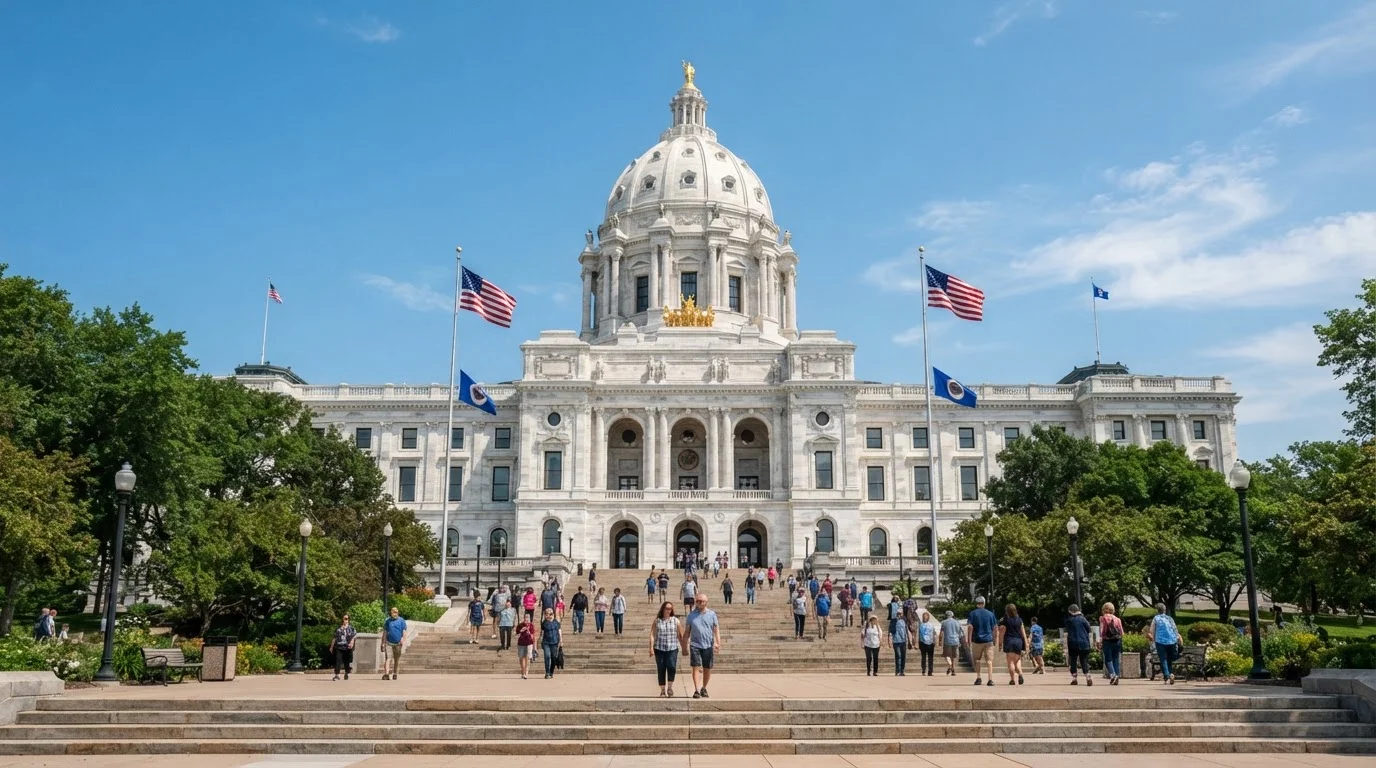
A state legislature is the elected lawmaking body of a U.S. state - the equivalent of Congress at the state level. It is responsible for passing laws, setting budgets, and establishing the rules that govern everyday life within that state's borders. In most states, the legislature has two chambers: a Senate and a House of Representatives.
Under the U.S. Constitution's Tenth Amendment, powers not delegated to the federal government are reserved to the states or the people - giving state legislatures broad authority over many aspects of daily life.
The Level of Government Closest to Your Life
When most Americans think about politics, they picture Washington - the president, Congress, and the nightly news cycle. Yet the laws most likely to directly affect a household's daily routine are frequently written not in the U.S. Capitol, but in state capitals like Columbus, Austin, Sacramento, and Albany.
State legislatures decide whether your landlord must return a security deposit within 14 days or 45. They set the minimum wage your employer must pay. They determine whether a teenager convicted of a minor drug offense faces probation or prison. They write the standards your child's public school teaches - and how that school is funded. Understanding which level of government controls what is one of the most practical pieces of civic knowledge an American can have.
50
Separate state minimum wage levels across the U.S.
The National Conference of State Legislatures tracks state minimum wage laws; as of recent years, the majority of states have set a rate above the federal $7.25 per hour floor.
~7,400
State legislators serving across all 50 states
The National Conference of State Legislatures estimates roughly 7,400 state legislative seats exist nationwide, compared to 535 members of the U.S. Congress.
38
States that have expanded Medicaid under the ACA
According to KFF (Kaiser Family Foundation) tracking, 38 states and Washington D.C. had adopted Medicaid expansion as of 2024, a decision made entirely at the state level.
Why States Hold So Much Power
The answer lies in the Constitution's design. The Tenth Amendment reserves all powers not explicitly granted to the federal government to the states and to the people. The Founders intended this as a safeguard against centralized authority, and it has made states the primary arena for a broad swath of law and policy.
Criminal law is one of the clearest examples. The overwhelming majority of crimes - from theft and assault to drug possession - are defined and prosecuted under state statute, not federal law. This is why marijuana remains federally illegal while dozens of states have legalized it for medical or recreational use without triggering mass federal prosecutions. States are, in the words often attributed to Supreme Court Justice Louis Brandeis, "laboratories of democracy" - places where new policy approaches can be tested before spreading, or not, to other states or the federal level.
Federal vs. State Law: When They Conflict
When a state law directly conflicts with a valid federal law, the federal law wins under the Constitution's Supremacy Clause. But in areas where Congress has remained silent or given states explicit flexibility - such as Medicaid administration or cannabis enforcement priorities - states have genuine room to chart their own course. This is why the landscape of American law can look so different depending on where you live.
Where State Laws Touch Your Daily Routine
Consider a typical weekday morning. The school your child attends follows a curriculum shaped by your state board of education, which operates under standards approved by the legislature. The wage on your pay stub is subject to your state's minimum wage law - which in many states is higher than the federal floor of $7.25 per hour. If you rent your home, your state's landlord-tenant statutes govern notice periods, repair obligations, and eviction procedures.
Healthcare is another prominent example. States license doctors, nurses, and pharmacists. They also decide whether to expand Medicaid under the Affordable Care Act - a decision that, as of recent years, has left millions of low-income adults in non-expansion states without coverage they would qualify for elsewhere. Voting rules, including identification requirements and early-voting availability, are largely state-controlled as well. To understand common misconceptions about how federal lawmaking works, it helps to first recognize how much Congress actually leaves to the states.
State Capitols as Starting Points for National Change
Historically, state legislatures have served as incubators for policies that later became national. No-fault divorce, same-sex partnership recognition, paid family leave, and marijuana decriminalization each gained early footholds at the state level before becoming subjects of federal debate. This pattern runs in multiple directions - state-level restrictions on abortion access and gun regulations have similarly moved through state houses before becoming national political issues.
State lawmakers also control congressional redistricting in most states - the once-a-decade process of redrawing district maps after the census. This gives state legislatures direct influence over which party holds power in the U.S. House of Representatives. For a deeper look at that process, see how redistricting and gerrymandering shape election outcomes.
For readers who want to understand how bills actually navigate the legislative process - at any level - how a bill becomes a law in the United States provides a plain-language walkthrough. And if understanding state power motivates you to act, there are concrete ways to engage with the political process beyond casting a ballot.