

Key Takeaways
Why Engagement Beyond Voting Matters
Elections get most of the civic attention, but the policies that shape everyday American life - utility rates, school curricula, zoning rules, Medicaid eligibility - are often decided between election cycles in committee rooms, agency offices, and city councils that attract little public notice. According to the National Conference of State Legislatures, the vast majority of laws governing housing, education, and public health originate at the state and local level, not in Washington.
This gap between where decisions happen and where most civic energy is focused means ordinary citizens have more leverage than they typically realize - if they know where to apply it. As civic engagement research shows, the full spectrum of participation extends well beyond the ballot box and is accessible to people regardless of political experience or background.
The following approaches are concrete, low-barrier, and grounded in how government actually works.
Contact Your Elected Officials Directly
Calls and written letters to congressional and state legislative offices remain among the most effective tools available to individual citizens. Congressional staffers have repeatedly confirmed in surveys conducted by organizations such as the Congressional Management Foundation that personal, constituent-specific phone calls and letters carry significantly more weight than mass emails or online petitions.
When contacting an office, identify yourself as a constituent, name the specific bill or issue you're addressing, and explain concisely how it affects your daily life. Brevity and specificity are more persuasive than length. Offices track constituent contact volume by issue, and patterns of repeated contact on a single topic are flagged for legislators.
A brief, specific phone call from a constituent regularly outweighs thousands of mass-generated petition signatures.
Attend Local Government Meetings
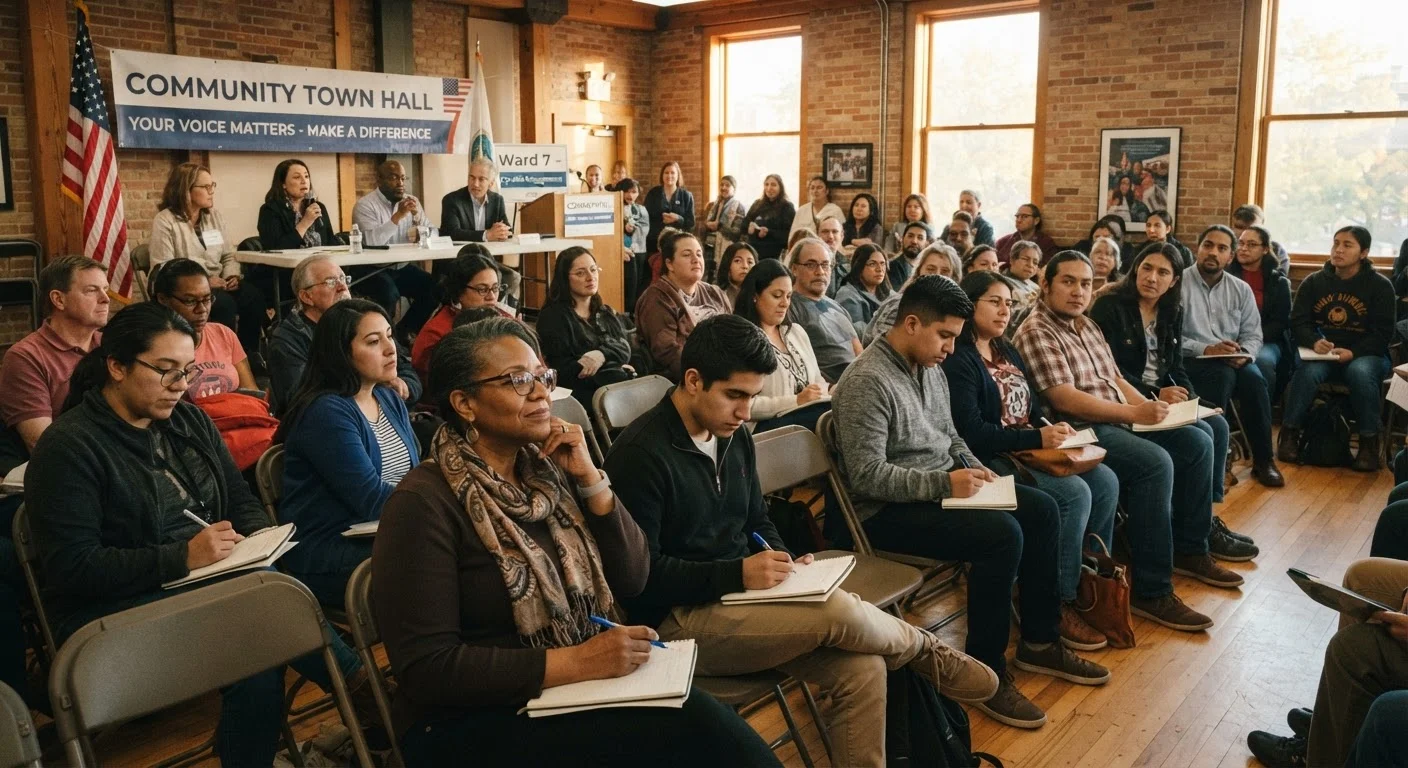
City councils, county commissions, school boards, and planning commissions make binding decisions about land use, public safety, local budgets, and school policy - often in meetings that are legally open to the public and that include formal public comment periods. Attendance alone signals constituent interest; speaking during public comment creates a documented public record of your position.
Agendas are typically posted in advance on municipal websites. Many jurisdictions now offer hybrid in-person and online participation options, reducing the time barrier further. Showing up consistently - even without speaking - communicates sustained community attention to officials.
Local government meetings are legally open forums where a single resident's comment becomes part of the official record.
Submit Public Comments on Proposed Regulations
Federal and state agencies are legally required under the Administrative Procedure Act to publish proposed rules and accept public comment before finalizing them. This is a direct, structured channel for citizen input into policy - and it is chronically underused by the general public.
The federal portal Regulations.gov lists all open comment periods across dozens of agencies, covering topics from environmental standards to financial rules to food labeling. Comments that include specific data, personal expertise, or documented local impacts carry the most analytical weight in agency review. Form letters are tracked but substantive individual responses are more likely to influence final rule language.
Agencies must read and respond to substantive public comments - it's a legally mandated feedback loop most Americans never use.
Volunteer for Election Administration
Poll workers, election judges, and ballot processing volunteers are essential to how elections function. Many jurisdictions across the country have reported persistent shortages of trained election workers, a gap that affects the efficiency and public confidence of the process itself. Serving as a poll worker is a nonpartisan civic role - workers are typically drawn from both major parties in equal numbers to ensure balance.
State and county election boards manage recruitment; most jurisdictions offer paid training and a stipend for Election Day service. Beyond the direct civic contribution, election workers gain firsthand knowledge of how the voting process operates, making them more informed participants in public debate about election policy.
Volunteering as a poll worker is one of the most direct, nonpartisan contributions any citizen can make to democratic infrastructure.
Join or Support a Civic or Issue-Focused Organization
Individual contact matters, but coordinated advocacy - through non-partisan civic leagues, issue-specific coalitions, or neighborhood associations - amplifies reach and sustains pressure over time. Organizations can track legislative calendars, alert members to key votes, and mobilize coordinated responses at moments when individual action alone would have limited impact.
The key distinction is between organizations that are genuinely issue-focused and those that function primarily as partisan vehicles. Non-partisan civic groups such as the League of Women Voters have a documented track record in voter education and policy advocacy that spans across party lines. Local neighborhood associations, parent-teacher organizations, and community development groups also offer structured channels for influencing the decisions that most immediately shape daily life.
Joining an issue-focused civic organization converts individual concern into sustained, coordinated influence over time.
Run for or Seek Appointment to Local Boards
Many consequential government positions - planning commissions, library boards, water district boards, and advisory committees - are filled by appointment or uncontested local elections. These roles place ordinary citizens directly inside the decision-making process, not outside lobbying it. Requirements vary by jurisdiction, but most demand only residency and willingness to attend regular meetings.
Running for a local office or applying for an appointed board seat does not require prior political experience, large fundraising capacity, or high name recognition. Municipal races in smaller communities are frequently decided by margins of dozens of votes, meaning that mobilizing a single neighborhood can be decisive. Local elected experience is also among the most common pathways to state legislative office for those who wish to pursue further public service.
Many local board seats go unfilled or uncontested - residency and availability are often the only real requirements.
Turning Awareness Into Action
Meaningful political engagement doesn't require a law degree, a campaign budget, or hours of free time every week. What it does require is consistency and a degree of specificity - knowing which level of government handles which issue, and directing your attention accordingly. Diffuse frustration rarely moves policy; focused, documented, repeated contact does.
Start With One Issue, One Level of Government
Civic engagement is most sustainable when it's focused. Choose one policy area that directly affects your household or community, identify whether it's primarily a local, state, or federal matter, and direct your energy accordingly. Spreading attention across every issue at once dilutes impact and accelerates burnout. Depth of engagement on a single issue over time is more likely to produce measurable results than broad but shallow participation.
It's also worth acknowledging the structural forces that can make engagement feel futile. Political polarization has made some legislative channels less responsive, but local and state arenas remain comparatively fluid, and agency rulemaking processes are legally required to consider public input regardless of partisan climate.
Sustained civic participation - even at a modest scale - is among the most documented predictors of policy responsiveness in democratic systems. Starting with one action from this list and building a habit from there is a realistic and evidence-supported approach.