

Key Takeaways
Third Place
A "third place" is any regular, informal gathering spot that is neither home (the first place) nor work (the second place). These are spaces - libraries, barbershops, diners, parks, bowling alleys, churches - where people meet as equals, without an agenda, and build the casual social bonds that hold communities together. The concept was introduced by sociologist Ray Oldenburg in his 1989 book "The Great Good Place."
Oldenburg identified eight core qualities of third places: they are free or inexpensive, highly accessible, involve regulars, are welcoming to newcomers, have a low profile, and foster a playful or conversational mood.
What Makes a Place a "Third Place"?
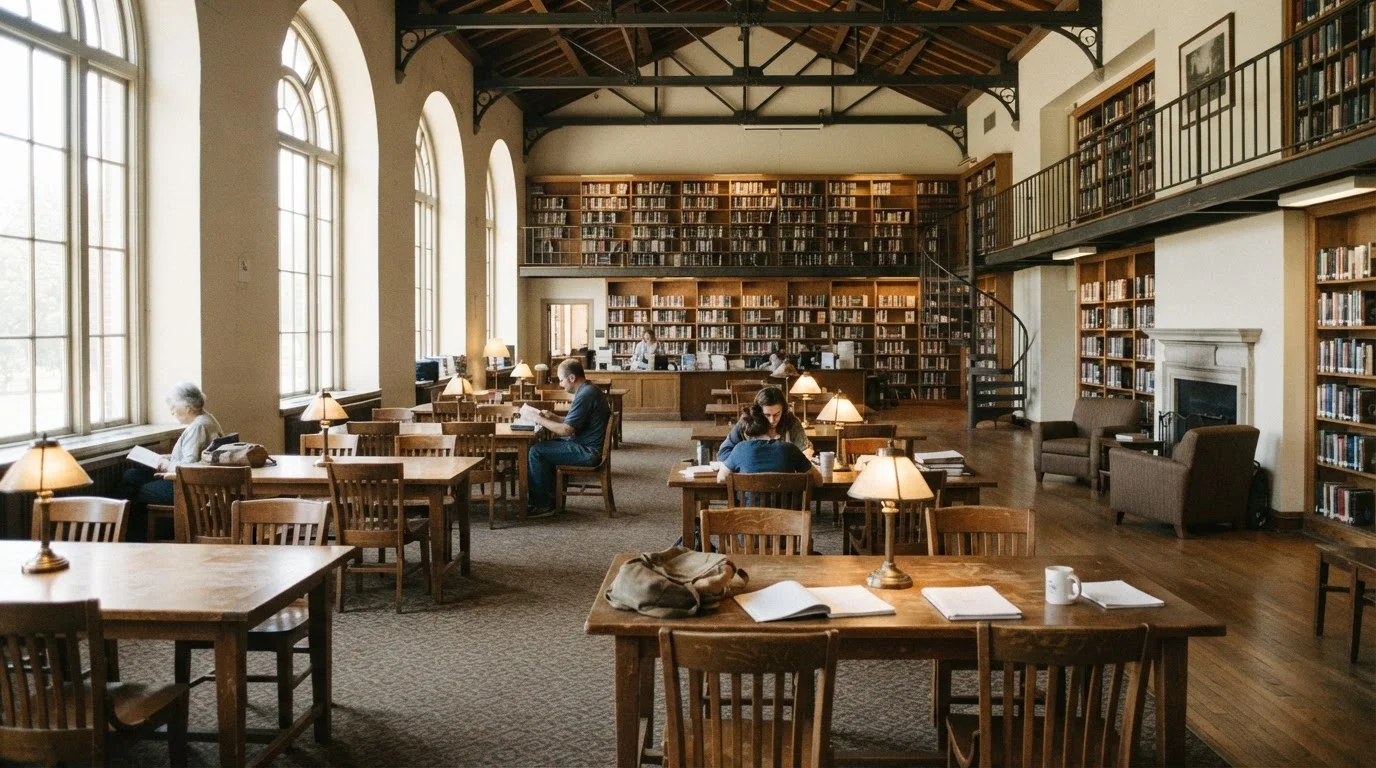
Sociologist Ray Oldenburg coined the term in 1989 to describe the informal public spaces that anchor everyday community life. Unlike home - where people retreat - or work - where they produce - third places are where people simply are, together, without much purpose beyond fellowship. The barbershop where regulars debate sports. The public library where retirees and students share tables. The corner diner where the waitress knows your order.
Oldenburg argued that these spaces are not amenities but necessities. They provide the social infrastructure that makes a neighborhood feel like a community rather than a collection of addresses. Crucially, they are accessible to most people - low cost, near home, and open to anyone willing to show up.
“The problem of place in America is that we have so cut ourselves off from the kinds of environments that nurture informal public life that we have forgotten what we are missing.”
— Ray Oldenburg, Urban sociologist and author of 'The Great Good Place'
How America Lost Its Third Places
The erosion has been gradual and driven by intersecting forces. Post-World War II suburbanization reshaped the built environment around the car and the private home, pushing gathering spaces further apart and making walking to them impractical. Strip malls replaced main streets. Chains replaced locally owned diners and taverns that had served as neighborhood anchors.
Institutional closures compounded the physical shift. Public library branches, union halls, bowling leagues, and fraternal organizations all declined sharply in the latter half of the 20th century. Church attendance has also fallen steadily, removing one of the most durable third places in American life. The American diner, once a democratic gathering space in thousands of towns, has seen closures accelerate as costs rise and chains consolidate the market.
Digital technology introduced what might be called a surrogate: social media platforms that simulate community without providing the spontaneous, in-person contact that defines a true third place. Convenience and connectivity came at the price of physical presence.
53%
Americans reporting no close friends outside family
A 2021 Survey Center on American Life poll found a sharp rise in social isolation compared to three decades earlier.
17%
Decline in U.S. civic organization membership since 1974
Political scientist Robert Putnam documented the collapse of participation in clubs, unions, and civic groups in his landmark work "Bowling Alone" (2000).
1 in 3
Americans who report feeling lonely frequently
The U.S. Surgeon General's 2023 advisory on loneliness cited polling showing persistent social disconnection across age groups.
What Communities Actually Lose
The social costs are concrete. Third places generate what sociologists call weak ties - the casual acquaintances who are often more valuable than close friends for finding jobs, exchanging information, or building civic trust. A neighbor you chat with at the park or the local coffee counter is a weak tie. Weak ties, in aggregate, are what give communities resilience.
Without regular, informal mixing across class and age lines, social trust erodes and political polarization deepens. People who never share physical space with those different from themselves find it easier to hold caricatured views of the "other." This phenomenon is explored in depth in the broader story of America's loneliness epidemic, which public health researchers now describe in epidemic terms.
The loss is not evenly distributed. Rural communities and lower-income urban neighborhoods - which are least likely to have well-funded parks, libraries, or commercial gathering spaces - absorb the greatest impact. Geography continues to shape these disparities, as rural and urban America diverge in access to civic infrastructure.
Signs of Effort to Rebuild
Some cities and organizations are responding. Mixed-use zoning reforms aim to reintroduce walkable, human-scale gathering spaces into neighborhoods built around highways. Libraries in many cities have reinvented themselves as community hubs offering services well beyond books - job-training rooms, free meeting space, mental health resources. Parks departments have invested in programming that brings residents together rather than just maintaining green space.
Informal efforts also persist. Block parties, community gardens, potlucks, and farmers markets serve some of the same social functions, even if they lack the daily regularity that Oldenburg considered essential. Whether these efforts can scale to fill the gap left by a century of declining third-place culture remains an open question - but recognition of the problem is itself a necessary first step.
How to Find or Support Third Places Near You
Local libraries, community centers, parks with programming, farmers markets, and neighborhood associations are among the most accessible remaining third places in most American communities. Attending regularly - not just occasionally - is what turns a venue into a genuine community anchor. Supporting funding for public libraries and green space through local civic participation also helps preserve these spaces for future residents.