

Key Takeaways
Why Inflation Measurement Sparks So Much Distrust
Few economic statistics generate as much public skepticism as the monthly inflation report. When the Bureau of Labor Statistics (BLS) announces that prices rose 3 percent over the past year, many Americans respond with disbelief - their grocery bills, rent, and insurance premiums feel far higher. That gap between personal experience and official data fuels persistent conspiracy theories about government manipulation, but it also points to genuine, legitimate criticisms that economists themselves raise.
Understanding where the myths end and the valid critiques begin matters enormously for how ordinary households interpret headlines and make financial decisions. For a deeper look at what the Consumer Price Index actually tracks, see what the CPI measures - and what it misses.
Myth
The government manipulates inflation numbers to hide the true rise in prices.
Fact
The BLS follows publicly documented, peer-reviewed methodology, and its data collection process is insulated from direct political direction.
The Consumer Price Index is produced by career civil servants using methods outlined in publicly available technical manuals. The BLS surveys roughly 75,000 retail establishments and 6,000 housing units monthly. Accusations of top-down manipulation misunderstand the agency's structure - it operates with statistical independence similar to other federal agencies like the Census Bureau. Independent researchers, including academic economists and international organizations such as the IMF, regularly audit and cross-reference U.S. inflation data without finding systematic falsification.
Myth
If my costs rose 10 percent this year, inflation must be at least 10 percent.
Fact
The CPI measures price changes for a national average basket of goods - your individual spending mix may differ significantly.
Inflation is a population-level average, not a personal measurement tool. A household that spends most of its budget on rent in a high-demand city, or one that drives long distances and is highly exposed to gasoline prices, will experience inflation very differently than the CPI average. The BLS constructs its basket based on the Consumer Expenditure Survey, which reflects aggregate national spending patterns. Someone whose costs outpace the CPI is not being lied to - they are simply spending in categories that are rising faster than the overall index. Why grocery bills feel higher than official numbers explores this gap in detail.
Myth
The government changed how inflation is calculated in the 1990s to artificially lower the reported number.
Fact
The BLS did revise its methodology in the 1990s, and those changes do produce lower readings - but the reasons are technical and debated by economists, not evidence of fraud.
During the 1990s, the BLS adopted several changes following recommendations from the Boskin Commission, a panel of economists convened by Congress. These included substitution adjustments (accounting for consumers swapping cheaper alternatives when prices rise) and hedonic quality adjustments (reflecting that a computer bought today is more powerful than one bought a decade ago for the same price). Critics, including economists at the left-leaning Economic Policy Institute and libertarian-leaning Shadow Stats analysts, argue these changes understate price burdens on fixed-income households. Those are legitimate methodological debates - but they differ fundamentally from claims that the numbers are simply invented.
Myth
There is one 'true' inflation number that the government conceals.
Fact
The BLS publishes multiple inflation measures, each designed for different purposes, and none is inherently more 'true' than the others.
Beyond the headline CPI, the BLS publishes the CPI-W (used to calculate Social Security cost-of-living adjustments), the chained CPI (used for certain tax bracket adjustments), and the Personal Consumption Expenditures (PCE) price index tracked by the Federal Reserve. The Bureau of Economic Analysis also publishes its own measures. Each uses different basket weights and methodologies suited to its specific policy purpose. Researchers and advocates can and do argue that a different index would better serve a given population - that is a meaningful policy argument, not proof of hidden figures.
Myth
Wages rising means you're automatically better off, regardless of inflation.
Fact
Only 'real' wage growth - increases that outpace inflation - translates into improved purchasing power.
A worker who receives a 4 percent raise in a year when inflation runs at 5 percent has effectively taken a pay cut in terms of what their income can buy. Economists call this the difference between nominal wages (the dollar figure) and real wages (adjusted for inflation). This distinction matters enormously for understanding living standards over time. How wage growth and inflation interact explains the mechanics in plain terms.
Legitimate Critiques vs. Outright Myths
Separating conspiracy from credible criticism requires a clear-eyed look at how the BLS builds and revises its methodology. Economists across the political spectrum have raised genuine concerns - about how substitution effects are handled, whether hedonic adjustments accurately reflect consumer value, and whether the basket of goods is updated frequently enough. These debates happen in peer-reviewed journals and congressional testimony, not in back rooms.
75,000+
Retail outlets surveyed monthly by the BLS
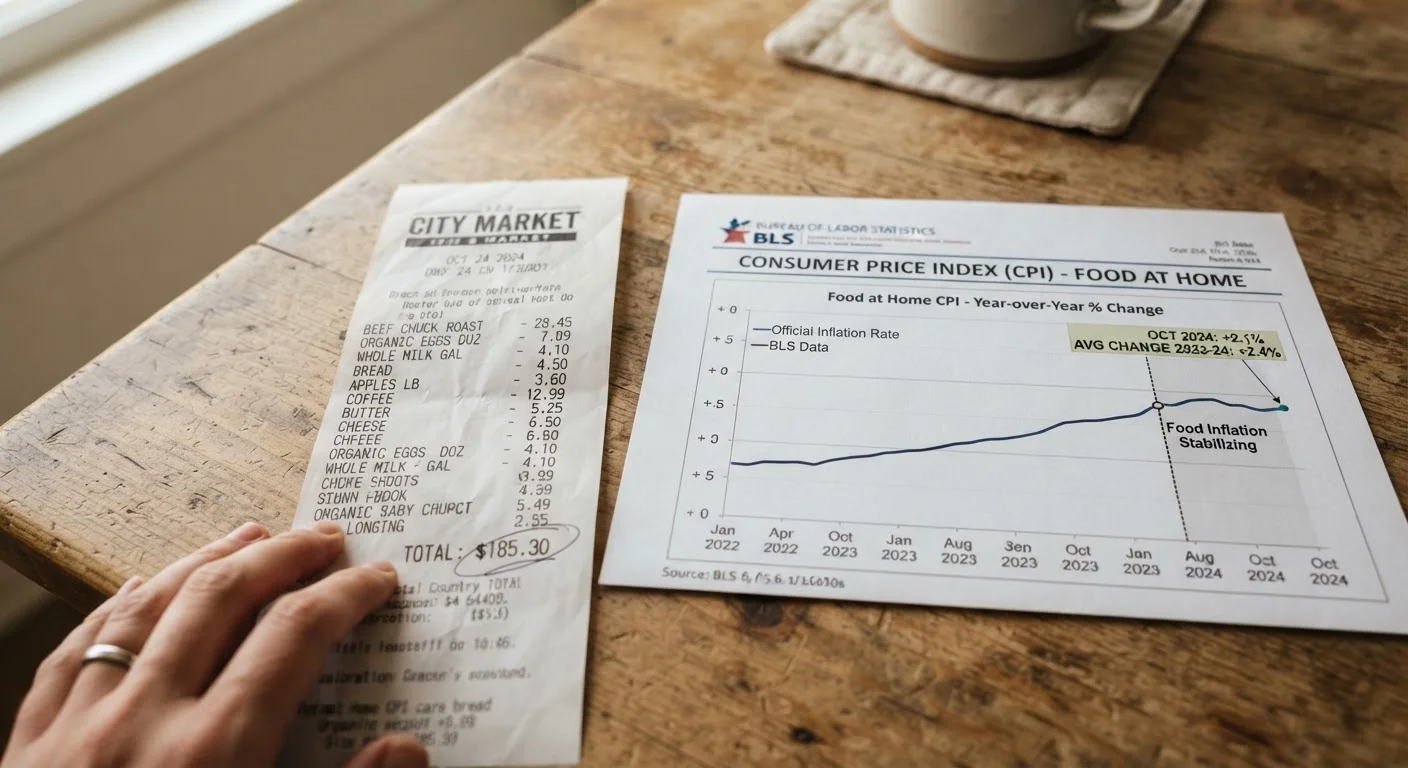
According to the Bureau of Labor Statistics, its price data collection spans tens of thousands of establishments across the United States each month.
~8
Distinct inflation indexes the BLS publishes
The BLS maintains multiple indexes - including the CPI-U, CPI-W, and chained CPI - each weighted differently for specific policy or demographic applications.
What is not supported by evidence is the claim that the BLS systematically falsifies numbers to serve political ends. The agency publishes its full methodology publicly and is subject to independent review. That said, no single index can capture every American household's reality equally - a retiree spending heavily on healthcare and a young renter in a high-cost city face very different price pressures than the average the CPI describes. The result is a figure that is simultaneously technically sound and personally unfamiliar to many people.
This same dynamic shows up in housing data - much like how median home price figures can be misleading, aggregate inflation indexes smooth over real variation. And as grocery bills feeling higher than reported inflation explains, that gap between felt and measured costs is often economically explainable - not evidence of fraud.
Inflation Data Shapes Real Policy Decisions
Social Security cost-of-living adjustments, federal income tax brackets, and many union wage contracts are directly tied to official inflation indexes. Dismissing these figures entirely - rather than understanding their limits - can lead households to misread their own financial situation and misinterpret policy changes that affect their income and benefits.
Policymakers, employers, and Social Security administrators use inflation benchmarks to adjust wages, benefits, and interest rates. Understanding the real limits of these measures - rather than dismissing them entirely - helps readers evaluate those decisions and their effects on household budgets. For a broader look at how price changes ripple through everyday finances, see how inflation and deflation affect your wallet.