

Key Takeaways
HVAC Maintenance
HVAC maintenance refers to the routine upkeep of your home's heating, ventilation, and air conditioning system. It covers both the simple tasks homeowners perform regularly - like changing filters - and the more technical inspections that licensed technicians conduct. The goal is to keep the system running efficiently, safely, and reliably throughout the year.
HVAC systems include the furnace or heat pump, air conditioner or evaporator coil, ductwork, thermostat, and related components - each with distinct maintenance intervals and service requirements.
What Homeowners Are Actually Expected to Do
Most homeowners vastly underestimate how much of HVAC upkeep falls squarely within their own wheelhouse - and overestimate how complicated it is. The tasks you're responsible for are straightforward, low-cost, and don't require any special tools or licenses.
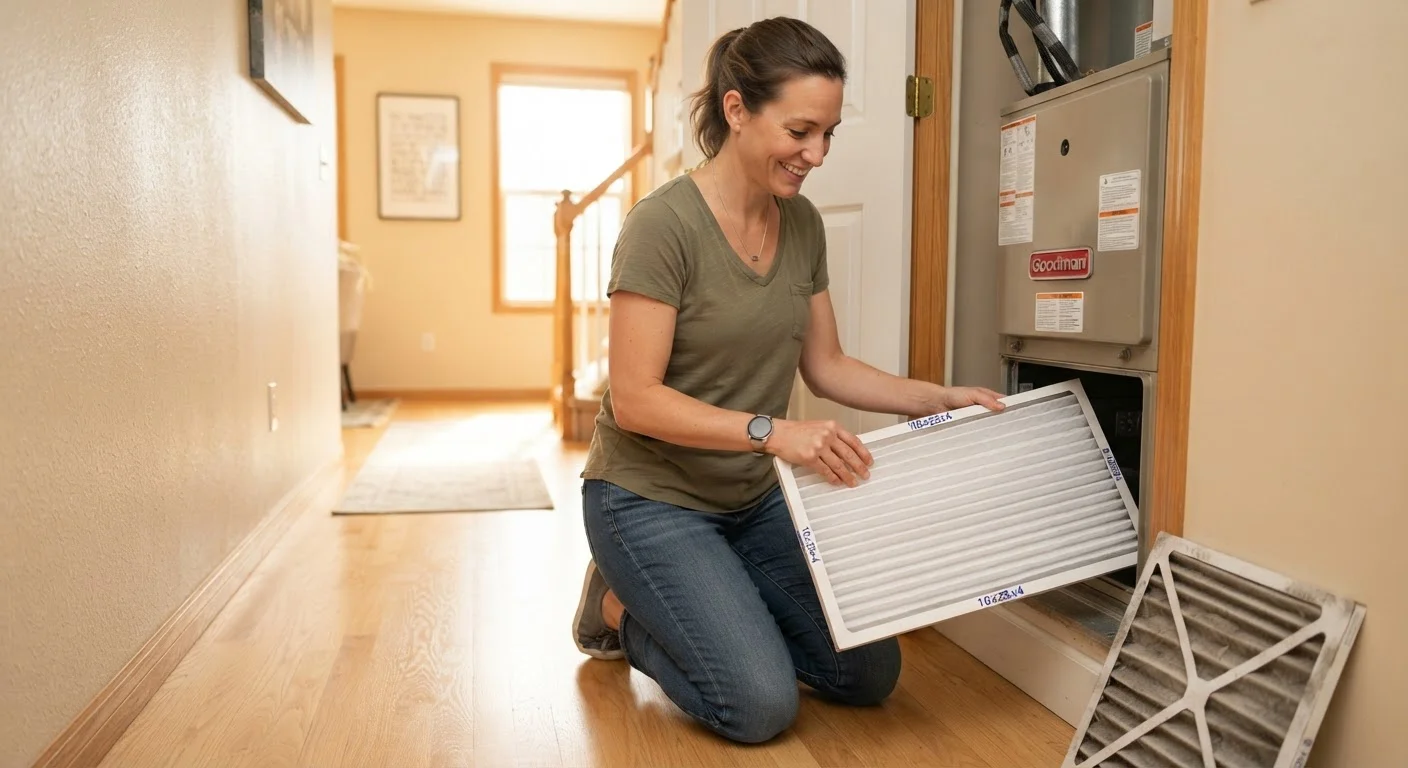
Filter replacement is the single most impactful thing you can do. A clogged filter restricts airflow, forces the blower motor to strain, and allows dust to accumulate on coils and internal components. Check your filter monthly and replace it when it appears gray and dense - don't wait for a schedule if conditions in your home (pets, renovation dust, wildfires) accelerate buildup.
Thermostat settings are your domain too. If you haven't already, switching to a programmable or smart thermostat helps the system run more efficiently by avoiding unnecessary heating or cooling during unoccupied hours. Verify that the thermostat responds accurately to temperature changes each season.
Keeping vents and registers clear is often overlooked. Furniture, rugs, or stored items blocking supply or return vents create pressure imbalances that reduce comfort and strain the system. Walk through your home seasonally and confirm all vents are open and unobstructed.
Outdoor condenser unit care involves keeping at least 2 feet of clearance around the unit, removing leaves and debris from the top and sides, and gently rinsing the fins with a garden hose - power off at the breaker first - if they appear dirty. Avoid harsh pressure washing.
Set a Filter-Change Reminder Right Now
Pull out your phone and set a recurring calendar reminder every 6 weeks to check your filter. In high-dust periods - during renovation, pet shedding season, or wildfire smoke events - check it even more frequently. A $10-$20 filter replacement is the most cost-effective HVAC maintenance you can do.
These tasks fit naturally into a broader seasonal home rhythm. See the month-by-month home maintenance calendar to build filter changes and vent checks into a schedule you'll actually follow.
What Requires a Licensed HVAC Technician
Certain HVAC tasks aren't just outside most homeowners' skill sets - they're legally restricted or genuinely dangerous without proper training and tools.
Refrigerant handling is regulated under EPA Section 608 of the Clean Air Act. Only certified technicians may purchase, recover, or recharge refrigerants. If your system seems low on refrigerant, that's a symptom of a leak - a technician needs to find and fix the leak, not just top it off.
Furnace and heat exchanger inspections are critical annual tasks that a technician performs with specialized tools. A cracked heat exchanger can allow carbon monoxide to enter living spaces - an invisible, odorless hazard. This is not a visual inspection a homeowner can reliably perform. For related safety measures, see our guide on carbon monoxide detector installation and testing.
Electrical components - capacitors, contactors, and wiring - should only be inspected or replaced by a licensed technician. These components hold dangerous charge even after power is disconnected.
Ductwork sealing and modification requires knowledge of airflow balancing and, in many jurisdictions, a permit. Improper duct changes can create backdrafting hazards with gas appliances.
Scheduling Professional Tune-Ups Strategically
Spring and fall tune-ups are ideal because they happen before the system faces its heaviest seasonal demand. Scheduling in March or April (before summer heat) and September or October (before winter cold) also means better technician availability and potentially shorter wait times than peak summer or midwinter emergency calls.
Most HVAC professionals recommend scheduling two professional tune-ups per year: one in spring before cooling season begins, and one in fall before you first run the heat. This timing catches problems before peak-demand periods when technician availability is tightest.
The Real Cost of Skipping HVAC Maintenance
HVAC systems are among the most expensive equipment in a home to replace - central air conditioners and furnaces routinely cost several thousand dollars installed. Yet many homeowners treat maintenance as optional until something breaks.
5-15%
Energy savings from regular filter replacement
The U.S. Department of Energy estimates that replacing a clogged HVAC filter with a clean one can reduce energy consumption by 5-15%.
10-15 years
Typical central AC lifespan with proper maintenance
According to the EPA's ENERGY STAR program, a well-maintained central air conditioner typically lasts 15-20 years, while neglected units may fail within 10.
~$150-$300
Typical annual HVAC tune-up cost
Professional HVAC tune-ups generally range from $75-$150 per visit; two visits per year is the standard recommendation for full heating and cooling systems.
A neglected system doesn't just fail earlier - it fails more expensively. Dirty evaporator coils reduce heat transfer efficiency, causing the compressor to overwork. A failed compressor in a central AC unit can cost as much as a significant portion of the entire system replacement cost, and many technicians recommend full replacement at that point.
Warranty implications are real, too. Manufacturers commonly require documented annual professional service to honor warranty claims. Without service records, a compressor failure that should be covered becomes an out-of-pocket expense. The true cost of deferred maintenance extends well beyond HVAC, but the HVAC system is often where the financial hit is sharpest.
For a broader picture of how HVAC fits into your whole-home upkeep strategy, the complete seasonal home maintenance system organizes every major system by season and priority level - useful for planning and budgeting annual upkeep rather than reacting to failures.