

Key Takeaways
Macronutrients
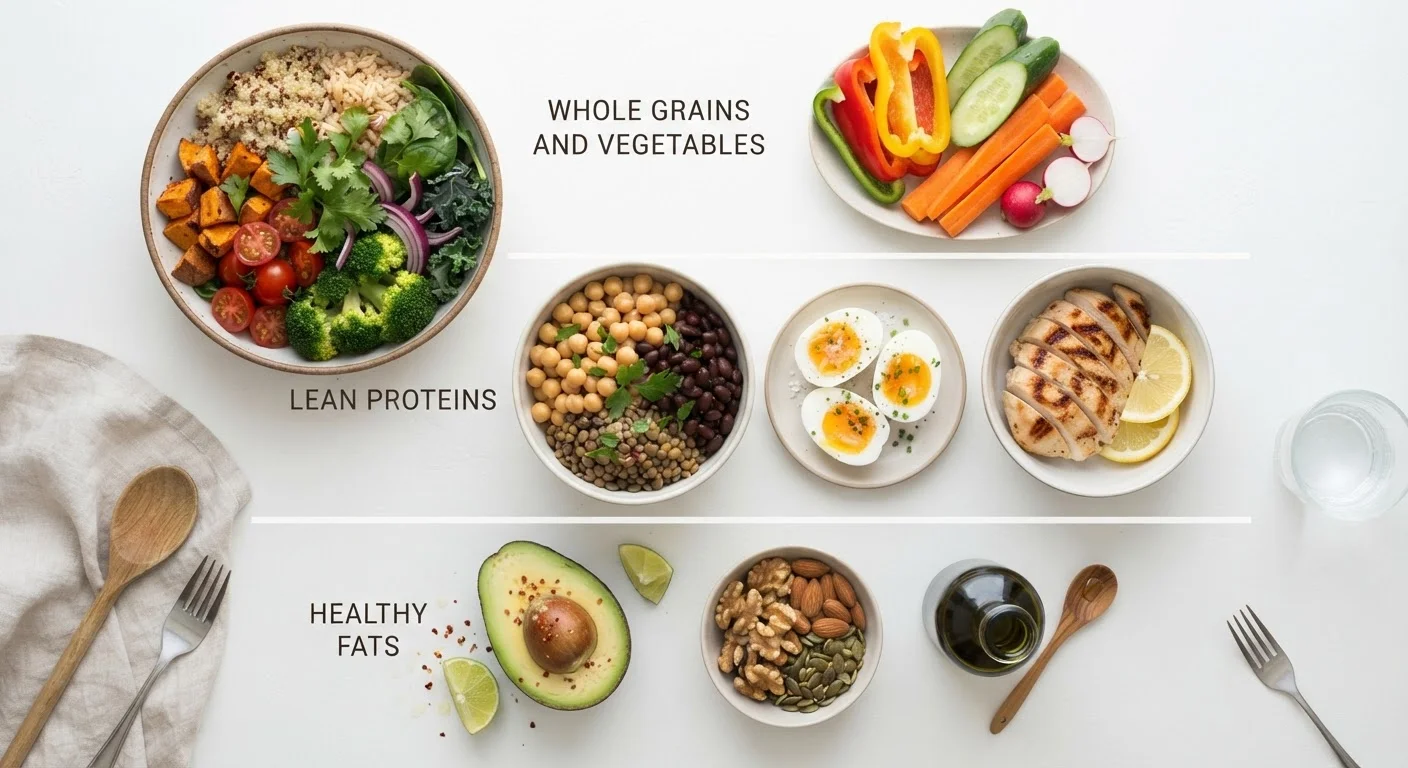
Macronutrients are the three primary nutrients your body needs in relatively large amounts: carbohydrates, protein, and fat. Each one provides energy and performs specific biological functions that keep your cells, organs, and systems running. Unlike vitamins and minerals - which are needed in smaller quantities - macronutrients form the structural and energetic foundation of your diet.
Energy from macronutrients is measured in kilocalories (kcal): carbohydrates and protein each provide 4 kcal per gram, while fat provides 9 kcal per gram.
Carbohydrates: The Body's First-Choice Fuel
When you eat carbohydrates - whether from oats, beans, fruit, or bread - your digestive system breaks them down into glucose, a simple sugar that circulates in the bloodstream. Glucose is the preferred energy currency for most cells, and it is the only fuel the brain can use directly under normal conditions.
Not all carbohydrates behave the same way. Simple carbohydrates (like those in table sugar) digest quickly, producing a rapid rise in blood glucose. Complex carbohydrates - found in whole grains, legumes, and vegetables - break down more slowly, providing steadier energy and, in the case of fiber, supporting digestive health and beneficial gut bacteria.
When glucose is abundant, the body stores excess as glycogen in the liver and muscles, acting as a reserve tank for between meals or during physical activity. Understanding this process helps explain why carbohydrate needs can vary significantly depending on activity level and overall dietary pattern. For a deeper look at nutrition terminology, our nutrition label glossary is a useful starting point.
4 kcal/g
Energy provided by carbohydrates per gram
Carbohydrates and protein both yield 4 kilocalories per gram, compared to 9 kcal/g for fat, according to standard nutritional biochemistry.
~20%
Share of body's energy used by the brain
The human brain accounts for roughly 20% of the body's total resting energy expenditure, relying primarily on glucose as its fuel, per neuroscience research.
9
Essential amino acids the body cannot produce
Of the 20 amino acids used in protein synthesis, nine must come from dietary sources because the human body lacks the enzymes to synthesize them.
Protein: Builder, Regulator, and Defender
Protein is constructed from chains of amino acids - 20 in total, nine of which are considered essential because the body cannot synthesize them on its own and must obtain them from food. Complete protein sources (eggs, meat, fish, dairy, soy) contain all nine essential amino acids; incomplete sources (most plant foods) contain some but not all, though combining varied plant foods over the course of a day covers this gap effectively.
Inside the body, protein does far more than build muscle. It forms the structural scaffolding of skin, hair, nails, and connective tissue. It creates enzymes that drive virtually every biochemical reaction. It produces antibodies that mount immune responses. And it plays a central role in hormone signaling - insulin, for instance, is a protein.
After digestion, amino acids travel through the bloodstream and are assembled into whatever the body currently needs most. Protein is in a constant state of turnover: old proteins are broken down, their amino acids recycled or excreted, and new ones synthesized. This is why consistent dietary protein - not just occasional high-protein meals - matters for maintaining these systems.
Fat: More Than Stored Energy
Dietary fat has been misunderstood for decades, often reduced to a villain in popular nutrition culture. In reality, fat is essential. The body requires it to absorb fat-soluble vitamins - A, D, E, and K - which cannot enter the bloodstream without fat present. Without adequate dietary fat, these vitamins pass through unabsorbed regardless of how much you consume.
Fat also forms the phospholipid bilayer of every cell membrane in your body, making it literally structural at the cellular level. Certain fats - omega-3 and omega-6 fatty acids - are classified as essential because the body cannot make them; they must come from food. These play key roles in brain function, inflammation regulation, and cardiovascular health.
Beyond cell structure, fat is the raw material for steroid hormones, including estrogen, testosterone, and cortisol. It also cushions organs and insulates the body against temperature changes. When carbohydrate stores are depleted - during prolonged fasting or extended exercise - fat becomes the dominant energy source through a process called beta-oxidation.
For a broader picture of how macronutrients interact with vitamins and minerals, see our guide on micronutrients for a complementary plain-language reference.
This article is for general informational purposes only and does not constitute medical or dietary advice. For guidance tailored to your individual health needs, consult a registered dietitian or qualified healthcare provider.