

Key Takeaways
Unit Pricing
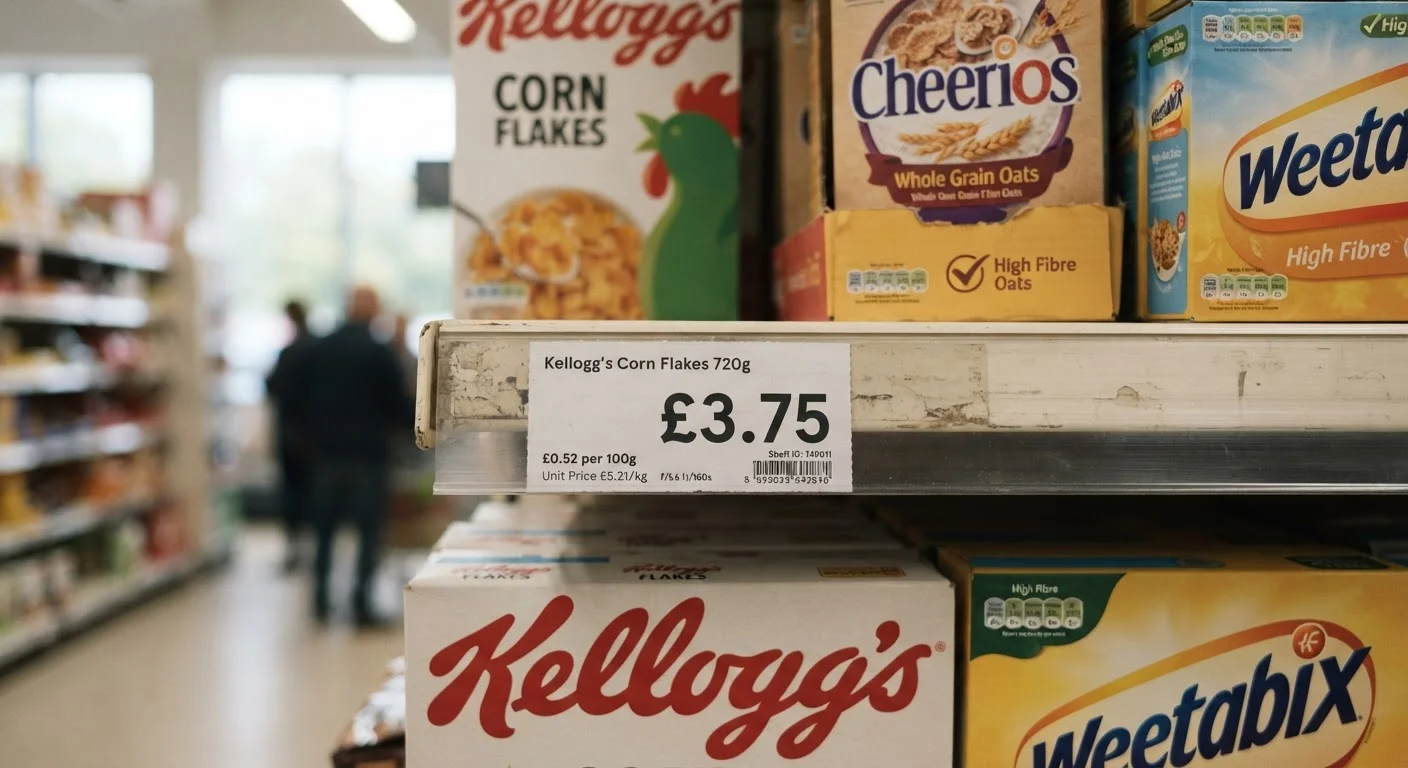
Unit pricing is the practice of displaying the cost of a product broken down by a standard unit of measurement - such as price per ounce, per pound, per count, or per fluid ounce. This number appears on the shelf tag alongside the total item price. It lets shoppers compare products of different sizes or brands on a level playing field, regardless of packaging.
In many U.S. states, unit pricing disclosure is required by law for certain product categories, particularly food and household goods sold in grocery stores. Requirements vary by jurisdiction.
What Unit Pricing Actually Tells You
Every time you pick up a product at the grocery store, you're looking at two prices: the total price you pay at checkout, and the unit price - the cost broken down by a standardized measurement. Most people focus entirely on the first number and ignore the second.
That's a costly habit. The total price tells you what you'll hand over at the register. The unit price tells you what you're actually getting for your money. A 32-oz bottle of dish soap priced at $4.99 and a 16-oz bottle priced at $2.79 look like a simple choice - but the unit price reveals that the smaller bottle costs more per ounce. Without that comparison, the cheaper sticker price can mislead you.
Unit prices are typically expressed as cost per ounce, per pound, per liter, per count, or per square foot, depending on the product category. The shelf tag will usually specify which unit is being used, so comparisons are apples-to-apples across different package sizes and brands.
Unit of Measure Varies by Product Type
Shelf tags use different units depending on the product category - ounces for food, sheets for paper products, loads for detergent, tablets for supplements. Always confirm you're comparing the same unit when evaluating two products, especially across categories or store formats. Comparing cost per ounce to cost per count, for example, won't give you a meaningful result.
The Bigger-Is-Cheaper Myth
Conventional shopping wisdom says: buy the largest size to get the best deal. That's often true - but not always. Retailers don't price by a simple economy-of-scale formula. Promotional pricing, shelf-space strategy, and inventory management all influence how products are priced, and the result is that mid-size or even smaller packages sometimes carry a lower unit price than the bulk option.
This pattern shows up consistently in categories like breakfast cereal, bottled beverages, and packaged snacks. A family-size box isn't automatically the thriftiest choice if a mid-size box happens to be on promotion that week - and the unit price is the only reliable way to confirm which is actually cheaper in the moment.
32
U.S. states with unit pricing laws for grocery items
According to consumer advocacy research, roughly 32 states have enacted some form of unit pricing regulation, though scope and enforcement vary significantly.
~14%
Effective price increase from a typical shrinkflation reduction
A package reduced from 12 oz to 10.5 oz at the same sticker price results in a unit price increase of approximately 14%, invisible without checking cost per unit.
The practical move: when you're comparing two or more sizes of the same product, look at the unit price column on the shelf tag rather than mentally dividing in your head. The math is already done for you.
Unit Pricing and Shrinkflation: A Critical Connection
Manufacturers sometimes reduce the quantity in a package while keeping the sticker price the same - a practice known as shrinkflation. Because the price tag doesn't change, many shoppers don't notice. But the unit price does change, and that's where the increase becomes visible.
If a bag of coffee that was 12 oz last year is now 10.5 oz at the same price, the total price looks stable but the unit price has risen roughly 14%. Without checking cost per ounce, that increase is nearly invisible. This is why understanding shrinkflation goes hand-in-hand with reading unit prices - one hides the other.
Unit pricing also helps when switching between brands. Store brands frequently offer identical or similar formulations at a lower unit cost than name brands. Comparing unit prices, rather than sticker prices, makes that gap concrete and easy to evaluate.
How to Use Unit Pricing as Part of a Broader Cost Framework
Unit pricing is a powerful tool at the shelf level, but it's one piece of a larger picture. A lower unit price on a product you won't fully use before it expires isn't a saving - it's a loss. Perishable goods, items with short shelf lives, and bulk quantities that exceed your actual consumption rate can make a high unit price item the smarter purchase in practice.
Similarly, unit price doesn't capture quality differences between products. Two laundry detergents might have the same cost per load, but if one requires two applications per wash to achieve the same result, the effective unit price doubles. As the relationship between price and value shows, the lowest number on the tag doesn't always represent the best outcome for your money.
For durable goods and products with ongoing costs - filters, ink cartridges, replacement parts - unit pricing at point of sale is just the beginning. Total cost of ownership fills in what unit pricing leaves out, accounting for the full spending picture over the life of a product.
Calculate Unit Price on the Fly
If a shelf tag doesn't display unit pricing clearly, use your phone's calculator: divide the total price by the total quantity (ounces, count, etc.) listed on the package. This gives you the cost per unit in seconds and makes any comparison straightforward.