

Key Takeaways
Our Verdict
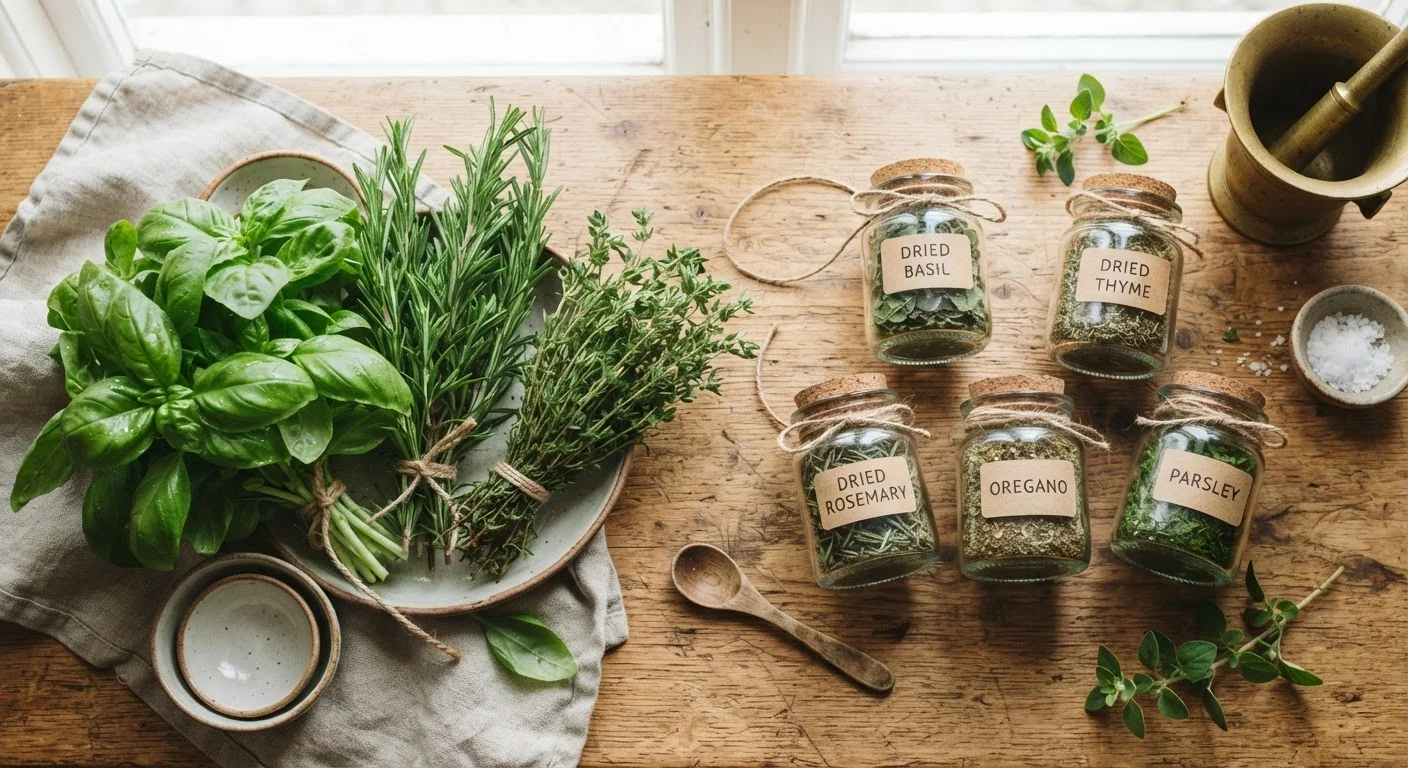
Neither fresh nor dried herbs is universally superior - context determines the winner. Dried herbs excel in slow braises, soups, and spice rubs where heat and time allow their flavors to fully bloom. Fresh herbs deliver brightness, color, and complexity that no jar can replicate in salads, finishes, and delicate sauces. Mastering the conversion ratio and knowing which herbs survive drying well is the real skill.
| Best for | Recommended |
|---|---|
| Long-simmered soups, stews, and braises | Dried herbs |
| Finishing dishes, salads, and raw applications | Fresh herbs |
| Spice rubs, marinades, and dry mixes | Dried herbs |
| Delicate preparations like pestos and chimichurri | Fresh herbs |
Why Fresh and Dried Herbs Aren't Simply Interchangeable
At first glance, swapping fresh herbs for dried seems straightforward - they're the same plant, after all. But drying concentrates the volatile oils responsible for flavor, making dried herbs significantly more potent by volume than their fresh counterparts. Water content in fresh herbs also affects how they interact with heat, moisture, and other ingredients in a dish.
Fresh herbs carry aromatic compounds that are highly heat-sensitive. Add them too early in a braise and that brightness evaporates, leaving little behind. Dried herbs, having already lost much of their moisture, release flavor slowly and consistently over long cooking times. Understanding this distinction is what separates a flat dish from a deeply layered one. For a broader foundation on how herbs fit into flavor building, see our guide to building flavor with aromatics.
The Conversion Ratio and How to Apply It
The widely accepted rule of thumb is 1 teaspoon of dried herbs for every 1 tablespoon of fresh - a 1:3 ratio. This accounts for the concentration effect of drying. If a recipe calls for 3 tablespoons of fresh thyme, you'd substitute 1 tablespoon of dried.
That said, this ratio is a starting point, not an absolute. Potency varies by how recently the dried herb was packaged, how it's been stored, and the herb itself. Always taste and adjust. A good practice: rub dried herbs between your fingers before adding them to a dish. This gentle friction helps break down cell walls and releases more aromatic oils before the herbs ever hit the pan.
| Fresh Herbs | Dried Herbs | |
|---|---|---|
| Flavor intensity (by volume) | Milder | 3× more concentrated |
| Best cooking application | Finishing and raw dishes | Long-cooked dishes and braises |
| Shelf life | Days to 2 weeks refrigerated | 6-12 months in a sealed jar |
| Herbs that work well | Basil, cilantro, parsley, chives | Thyme, oregano, rosemary, bay leaf |
| When to add during cooking | At the end or as garnish | Early in the cooking process |
| Cost and availability | Seasonal, perishable, pricier | Year-round, shelf-stable, affordable |
For dishes with complex liquid foundations - where getting the depth right really matters - the same instinct applies. Our comparison of stock vs. broth walks through a similar kind of nuanced substitution thinking.
Which Herbs Survive Drying - and Which Don't
Not all herbs dry equally well. Robust, woody herbs like thyme, rosemary, oregano, bay leaves, and sage retain their essential character through the drying process. These are reliable substitutes for their fresh versions in cooked applications.
Tender, leafy herbs - basil, cilantro, parsley, chives, dill, and tarragon - suffer dramatically when dried. Their volatile oils dissipate quickly, leaving behind a muted, sometimes dusty echo of the original flavor. Dried basil, for instance, tastes little like the fresh leaf. For dishes where these herbs are central, fresh is essentially non-negotiable.
Bloom Dried Herbs for Better Flavor
Before adding dried herbs directly to a dish, try blooming them first: add them to warm oil or butter for 30-60 seconds before adding other ingredients. This heat-activated step helps volatilize the aromatic compounds, drawing out significantly more flavor than simply tossing them into a liquid. It's especially effective with oregano, thyme, and cumin-adjacent spice blends.
A middle ground worth knowing: freeze-dried herbs preserve fresh flavor far better than traditionally air-dried or heat-dried versions, especially for cilantro and parsley. They're worth seeking out when fresh isn't available.
Timing: When to Add Each Form
Timing is as important as quantity. Dried herbs need time and heat to hydrate and release their compounds - add them early in the cooking process, ideally when sautéing aromatics or at the start of a simmer. This is why a slow-cooked tomato sauce can taste fully herbed with just a teaspoon of dried oregano added at the beginning.
Fresh herbs, by contrast, are best added at the end of cooking or as a garnish. Stir in chopped basil just before serving a pasta dish, finish a soup with fresh parsley, or scatter mint over a grain bowl right before it reaches the table. This preserves their volatile oils, bright color, and clean flavor. The one exception: fresh woody herbs like rosemary and thyme can handle moderate cooking times and work well tucked into roasts or added to a sauté early on.