

Key Takeaways
Our Verdict
Neither new construction nor existing homes is universally superior - the right choice depends on your timeline, budget, tolerance for compromise, and the specific inventory in your target market. New builds suit buyers who prioritize modern systems and warranties and can wait; resale homes suit those who need faster timelines, established neighborhoods, or more negotiating room.
| Best for | Recommended |
|---|---|
| Buyers who want move-in-ready modern features and warranty coverage | New Construction |
| Buyers with tight timelines or flexibility on cosmetic updates | Existing Home |
| Buyers seeking established schools, mature landscaping, and walkable areas | Existing Home |
| Buyers willing to pay a premium for full customization and fewer surprises in the first years | New Construction |
Why This Choice Matters More Than Most Buyers Expect
Choosing between a newly built home and an existing resale property is one of the earliest - and most consequential - decisions in the homebuying process. It shapes your timeline, your financing options, your negotiating leverage, and what you're likely to spend in the first five years of ownership. Before you ever tour a property, it helps to understand how these two paths actually differ. If you're still weighing whether to buy at all, our guide on renting vs. buying is a useful starting point.
The comparison isn't as simple as new versus old. It's really about trade-offs: predictability vs. character, premium pricing vs. negotiating room, modern infrastructure vs. established community. Understanding both sides clearly prevents costly surprises.
Cost, Pricing, and What's Actually Negotiable
New construction typically carries a price premium. Builders price homes to cover land acquisition, materials, labor, and profit margin - and in active markets, they rarely need to discount. That said, builders may offer incentives like covering closing costs or including appliance packages, particularly when inventory sits unsold. These incentives aren't the same as price reductions, so buyers should evaluate them carefully.
Existing homes, by contrast, are priced by individual sellers and shaped by comparable sales, days on market, and seller motivation. In a buyer's market, resale homes often allow meaningful negotiation - on price, repairs, or credits. In a seller's market, that leverage narrows considerably. Either way, the resale market is broader and more varied, which gives buyers more options across price points.
| New Construction | Existing Home | |
|---|---|---|
| Typical Price Point | Often higher; less negotiable | Wider range; more room to negotiate |
| Closing Timeline | 30 days to 18+ months | 30-60 days once under contract |
| Condition & Systems | Modern, code-compliant, under warranty | Varies; inspection essential |
| Customization | Possible if purchased early in build | Limited to post-purchase renovations |
| Location Availability | Suburban/exurban corridors | Broader, including urban areas |
| Near-Term Maintenance Costs | Generally lower; warranty coverage | Potentially higher for older homes |
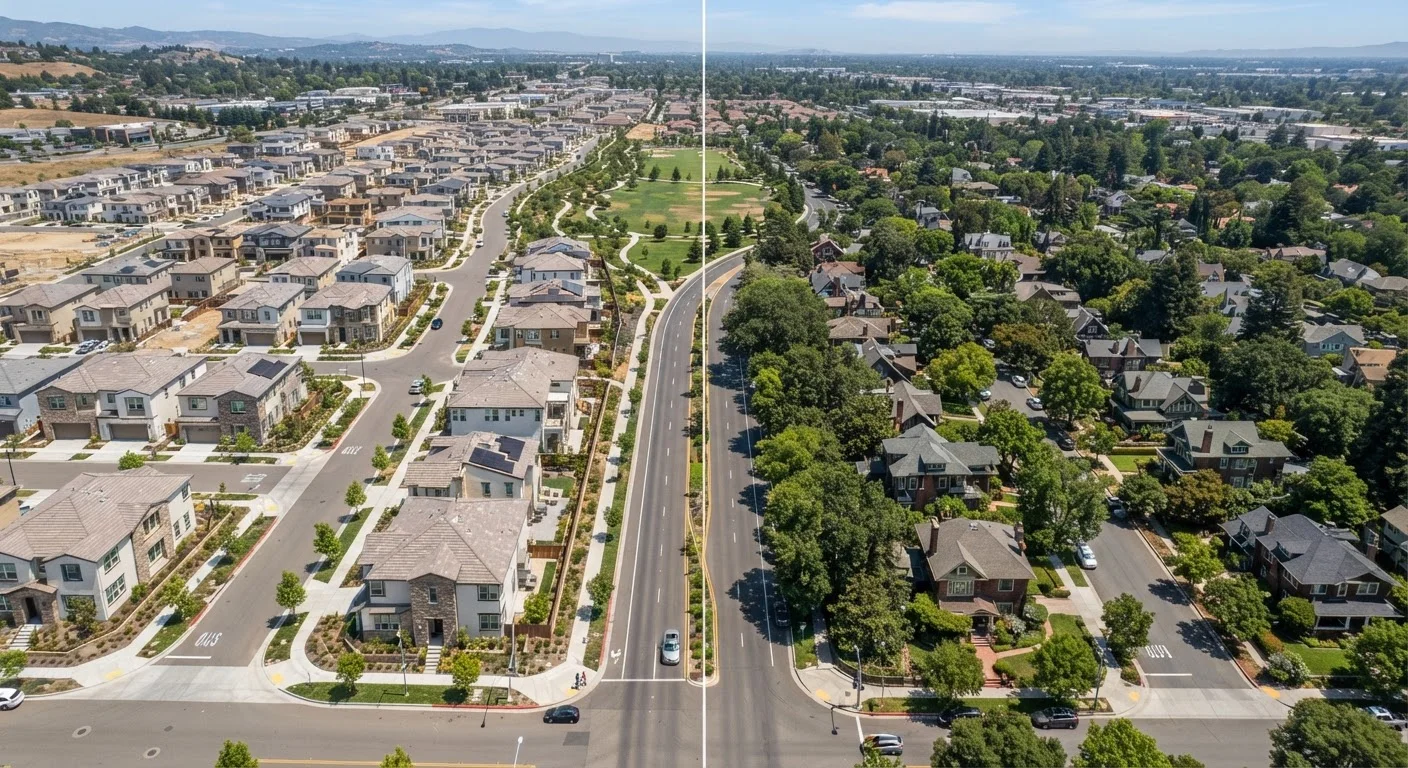
| Character & Landscaping | Minimal at first; develops over time | Mature trees, established neighborhood |
One cost category buyers sometimes overlook: ongoing maintenance. A new home under builder warranty typically has lower near-term repair costs. An older home - especially one built before the 1980s - may need roof, HVAC, plumbing, or electrical updates that can add tens of thousands in expense within the first decade.
Timeline, Availability, and Market Realities
Existing homes are generally faster to close - typically 30 to 60 days once under contract, assuming financing proceeds smoothly. New construction timelines vary widely. A quick move-in spec home (one already under construction) might close in 30 to 90 days. A fully custom build can take 12 to 18 months or longer depending on permitting, supply chains, and builder capacity.
For buyers with lease expirations, job relocations, or school enrollment deadlines, the timeline uncertainty of new construction is a real constraint. If your situation demands flexibility, asking the right questions at every stage of the process - including directly with builders about realistic delivery dates - is essential.
Ask Builders for References and Delivery History
Before signing a purchase contract with a builder, ask for references from recent buyers and inquire about the builder's track record on delivery timelines. Many buyers discover late completions only after they've already given notice on their rental. A builder's history of on-time delivery is a meaningful factor that's easy to overlook in the excitement of a new home purchase.
Geographic availability also matters. New construction is concentrated in suburban growth corridors and exurban areas where land is available. In urban cores, infill development exists but is limited. If proximity to city amenities or a specific school district is a priority, the existing home inventory is almost always larger and more varied.
Condition, Customization, and What You're Actually Getting
New homes come with current building codes, modern insulation, energy-efficient windows, and updated electrical and HVAC systems. For buyers who want to avoid the uncertainty of aging infrastructure, that's a meaningful advantage. Many builders also offer structural warranties (commonly 10 years) and shorter-term coverage on systems and finishes.
Customization is a genuine draw - buyers who purchase early in a build cycle can often choose finishes, floor plans, and upgrades. However, builder-grade upgrades can be expensive relative to what the same money would buy on the open market, and not all builders allow substantial modifications.
Existing homes offer their own form of character: mature landscaping, established street trees, architectural detail, and lot sizes that new subdivisions rarely replicate. They've also been lived in, which means issues tend to surface in the inspection rather than after move-in. A thorough independent inspection is non-negotiable for resale homes - and is equally advisable for new construction, where buyers sometimes incorrectly assume builder quality assurance is sufficient. Local market dynamics shape both options further; understanding your specific market conditions can change which path makes more financial sense.
Financing Differences Buyers Should Know
Most buyers finance both new and existing homes with conventional or government-backed mortgages. However, new construction introduces some additional complexity. If a home isn't complete, lenders may require a construction-to-permanent loan or a separate construction loan that converts at closing - each with its own terms and rate structure. Rate locks can also be harder to manage when build timelines extend beyond expected windows.
For existing homes, financing is generally more straightforward, though the appraisal must support the purchase price. In competitive markets where buyers waive conditions or offer above asking, appraisal gaps can create financing complications. Buyers should discuss these scenarios with their lender before making offers. This article is general educational information and not personalized financial or legal advice; consult a licensed mortgage professional and real estate attorney for guidance on your specific situation.
This article is for general informational purposes only and does not constitute financial, legal, or real estate advice. Readers should consult qualified professionals before making homebuying decisions.