

Key Takeaways
Why Indoor Cats Need Active Enrichment
Indoor cats typically live significantly longer than their outdoor counterparts - a benefit tied directly to reduced exposure to traffic, predators, and infectious disease. But a longer life indoors isn't automatically a better one. Without intentional enrichment, cats can develop chronic stress, obesity, and behavior problems rooted in unmet instinctual needs.
In the wild, cats spend a large portion of their waking hours hunting, exploring territory, and navigating complex social and environmental stimuli. A standard apartment offers none of that by default. The result is a cat that may sleep excessively, overeat, vocalize repeatedly, or redirect frustration into scratching furniture and other destructive outlets.
Understanding that these behaviors are signals - not character flaws - is the first step. See our species-specific enrichment guide for a deeper look at how cats process their environment compared to other pets.
Signs of Poor Stimulation to Watch For
Excessive vocalization, compulsive grooming leading to hair loss, aggression directed at people or other pets, and weight gain without dietary changes are all recognized indicators of chronic understimulation or stress in indoor cats. These signs can also indicate underlying medical conditions, so a veterinary evaluation is recommended when they appear or persist. Early intervention prevents mild behavioral issues from becoming entrenched habits.
Best Practices for Mental and Physical Stimulation
Consistent, varied enrichment doesn't require elaborate setups or significant expense. What matters most is regularity and responsiveness to your individual cat's preferences and energy level.
Rotate toys on a weekly schedule to sustain novelty
Cats habituate quickly to familiar objects - a toy that generates intense interest on Monday may be completely ignored by Thursday. Cycling toys in and out of rotation restores novelty and reignites predatory interest without purchasing new items constantly.
Install vertical spaces such as cat trees, shelves, or window perches
Height provides cats with a sense of security and territorial ownership. Access to vertical territory reduces anxiety, gives cats a vantage point to observe their environment, and encourages natural climbing movement that exercises muscle groups underused in flat living spaces.
Schedule at least two dedicated interactive play sessions daily
Scheduled play - particularly with wand-style toys that mimic prey movement - activates the hunt sequence (stalk, chase, pounce, catch) that cats are biologically wired to complete. Completing this sequence reduces stress hormones and provides meaningful physical exercise.
Introduce puzzle feeders to replace some or all bowl feeding
When cats eat from a stationary bowl, they bypass the mental effort that foraging naturally demands. Puzzle feeders slow eating, reduce overeating, and engage problem-solving instincts that keep the brain active - a particular benefit for cats prone to boredom-related weight gain.
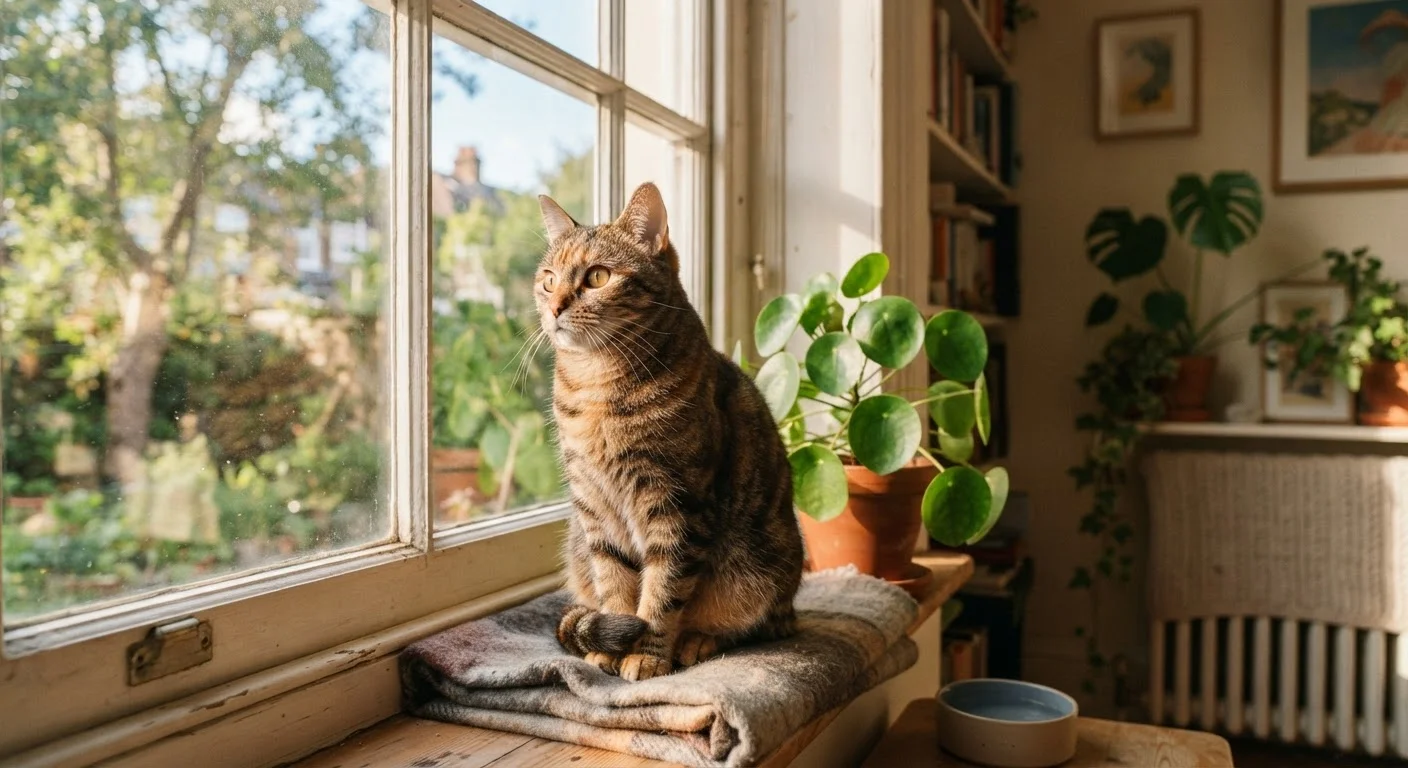
Provide safe outdoor sensory exposure through screened enclosures or window access
Fresh air, natural sounds, and the sight and scent of outdoor animals engage sensory systems that indoor environments rarely stimulate. Even passive exposure through a securely screened window can reduce behavioral signs of frustration significantly.
Observe your cat's body language and adapt enrichment accordingly
A well-stimulated cat typically shows bright eyes, a healthy weight, interest in play, and a mix of active and restful periods. Conversely, hiding, excessive grooming, aggression, or marked changes in appetite are signals worth investigating with a veterinarian.
Quick Wins You Can Start Today
If you're new to intentional enrichment or noticing early signs of boredom in your cat, these immediate actions can produce visible results within days.
As your cat ages, enrichment needs shift. Older cats may require gentler activities with lower physical demand - a topic covered in depth in our article on how aging changes a pet's health needs. For a complete picture of daily cat care, explore the Pet Care Basics hub, which covers feeding, grooming, and routine health practices.
This article is for general informational purposes only and does not constitute veterinary advice. If you have concerns about your cat's health or behavior, consult a licensed veterinarian.