

Key Takeaways
Pre-Sleep Circling Behavior
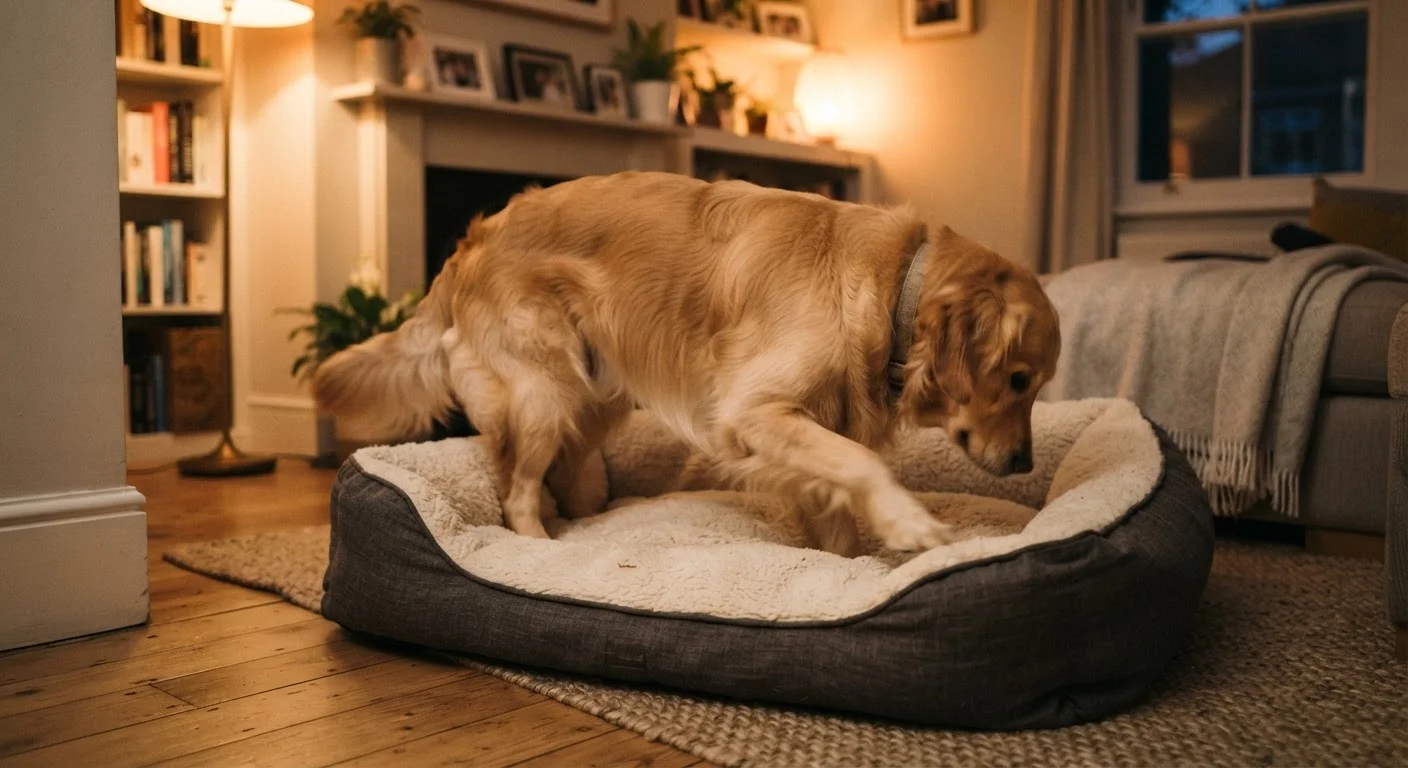
Pre-sleep circling is the instinctive spinning or turning a dog performs before lying down to rest. It is a normal, hardwired behavior inherited from wild canine ancestors. The motion serves several practical purposes rooted in survival, comfort, and environmental awareness.
Ethologists - scientists who study animal behavior - classify this as a fixed action pattern: a stereotyped sequence triggered by specific stimuli, in this case the physiological cue to rest.
The Evolutionary Explanation
Long before dogs curled up on memory-foam beds, their wild ancestors slept on uneven, debris-covered ground. Circling was a practical act of preparation - spinning flattened tall grass or brush, creating a more level and comfortable sleeping surface. The repetitive motion also helped dislodge hidden insects, snakes, or other small threats lurking in the vegetation.
There's a thermoregulatory dimension as well. In colder climates, circling helped animals burrow slightly into the ground or nestle into grass for insulation. In warmer environments, the motion exposed cooler soil beneath the surface. Either way, the behavior contributed to a safer, more comfortable sleep environment - a genuine survival advantage that became encoded in canine genetics over thousands of generations.
Wild canids also used the motion to orient themselves relative to the wind. Positioning with the nose pointed into the breeze allowed them to detect approaching predators or prey even while resting. That instinct persists, even when the only breeze in the room comes from an air vent.
“Much of what we observe in domestic dog behavior are ancient adaptations that persist because they were never selected against - the environment changed, but the instinct remained.”
— A veterinary behaviorist, Board-certified veterinary behaviorist specializing in canine ethology
What the Behavior Looks Like - and Why It Varies
Most dogs perform one to three turns before settling. Some are quick and perfunctory about it; others engage in elaborate, multi-rotation rituals. The variation is largely individual, though breed, age, and the softness of the sleeping surface all play a role.
Dogs often combine circling with pawing or scratching at their bed - another relic of nest-building behavior. Loose materials like blankets get rearranged through this motion, mimicking the leaf-and-grass manipulation their ancestors relied on. Providing a bed with washable, rearrangeable bedding often satisfies this drive more effectively than a flat, rigid mat.
Choose a Bed That Works With the Instinct
Dogs tend to circle more contentedly on beds with raised edges or loose, rearrangeable filling. These surfaces mimic natural materials and satisfy the nesting drive without requiring extra space. A bed that's too small relative to your dog's size can cause frustration and prolonged circling.
Puppies may circle less predictably than adult dogs because the neural pathways governing the behavior are still maturing. Senior dogs, on the other hand, sometimes circle more slowly or with visible effort, which is worth monitoring as they age.
When Circling Becomes a Concern
The vast majority of pre-sleep circling is benign. But there are specific patterns that warrant a conversation with your veterinarian. If your dog circles compulsively without lying down, appears confused or disoriented during the behavior, vocalizes in pain, or seems unable to find a comfortable position, something beyond instinct may be at play.
Orthopedic conditions such as hip dysplasia or arthritis can make the act of lowering the body painful, causing dogs to circle longer as they search for an angle that reduces discomfort. Canine cognitive dysfunction - a neurological condition associated with aging - can also manifest as repetitive circling, often accompanied by other behavioral changes like nighttime restlessness or disorientation.
~14%
Senior dogs affected by cognitive dysfunction
Research published in veterinary literature suggests cognitive dysfunction syndrome affects a notable proportion of dogs over age 8, with behavioral changes like circling among the recognized signs.
1-3 turns
Typical rotations before lying down
Behavioral observations of domestic dogs consistently show most complete one to three turns as their standard pre-rest routine.
Any sudden increase in circling frequency or any circling that seems distressed rather than purposeful deserves veterinary attention. Early evaluation leads to earlier intervention, which matters significantly for conditions like arthritis or cognitive decline.
This article is for general informational and educational purposes only and does not constitute veterinary or medical advice. Always consult a qualified veterinarian regarding your individual pet's health and behavior.