

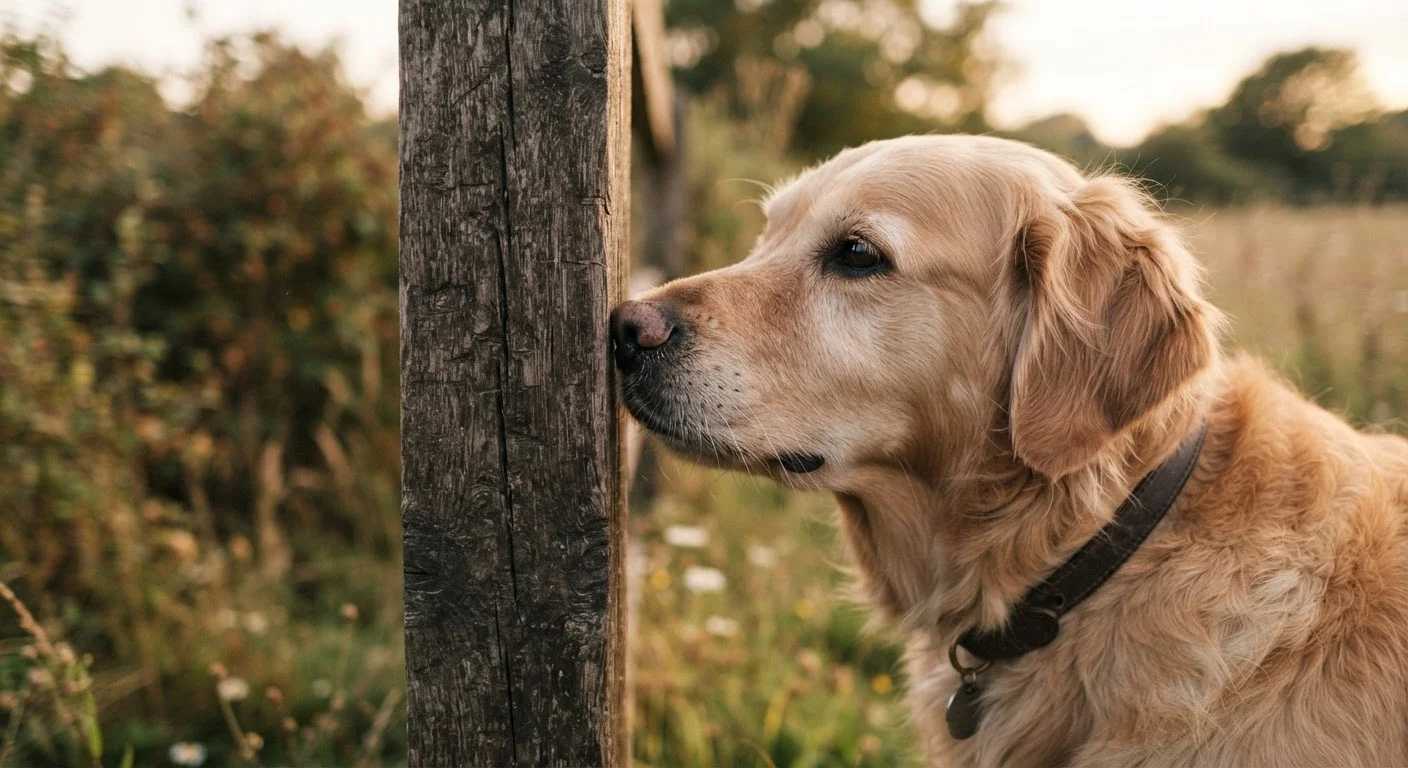
Key Takeaways
Olfactory Communication
Olfactory communication is the way animals exchange information through scent - using chemicals produced by their own bodies to send messages to other animals. These chemical signals, called pheromones and semiochemicals, can convey identity, reproductive status, territorial boundaries, and emotional state. Unlike visual or vocal signals, scent messages persist long after the sender has left, functioning more like a written note than a spoken word.
Scent signals are detected through specialized receptors in the nasal epithelium and, in many mammals, the vomeronasal organ (also called Jacobson's organ), which processes pheromone information separately from ordinary odor detection.
The Chemistry of Animal Conversation
When your dog lingers at a fire hydrant or your cat headbutts the corner of a couch, they are engaged in something far more purposeful than quirky habit. They are reading and writing in a chemical language that has evolved over millions of years. Scent communication is arguably the oldest form of animal signaling, and for most domestic species it remains the primary channel through which social information is exchanged.
Animals produce scent signals from a range of sources: urine, feces, anal glands, skin glands concentrated around the face and paws, and even exhaled breath. Each source carries a different kind of message. Urine, for instance, encodes information about an individual's identity, sex, reproductive state, and health status. A dog investigating a patch of grass isn't just smelling - it's absorbing a detailed biological profile of every animal that passed through.
For a deeper look at how behavioral signals work together, see the starter guide to animal behavior covering foundational concepts every pet owner benefits from understanding.
~300 million
Scent receptors in a dog's nose
Dogs are estimated to have approximately 300 million olfactory receptors compared to roughly 6 million in humans, according to widely cited veterinary anatomy references.
~14×
Greater scent-processing brain area in cats vs. humans
The olfactory cortex of cats is proportionally much larger than that of humans, reflecting the central role scent plays in feline social and environmental perception.
2-4 weeks
How long scent marks can persist outdoors
Environmental conditions vary, but research on canid territorial marking suggests urine scent marks can remain chemically detectable to other animals for up to several weeks under dry conditions.
What Different Scent Behaviors Actually Signal
Understanding what specific behaviors mean helps pet owners respond appropriately rather than reactively.
- Urine marking: In both cats and dogs, deliberately deposited urine on vertical surfaces is typically territorial or reproductive signaling. It says, in effect, "I was here, this space is known to me." The behavior increases when an animal feels its boundaries are threatened - by a new pet, an unfamiliar visitor, or even a change in routine.
- Facial rubbing and bunting: Cats have scent glands on their cheeks, forehead, and chin. When a cat rubs these areas on objects or people, it is depositing calming, familiar-scent pheromones. This is an affiliative behavior - a chemical form of comfort-marking rather than a territorial claim.
- Scratching: Cat scratching combines a visual mark with scent deposition from glands in the paw pads. The location - often prominent and near entry points - is deliberate.
- Anal gland expression: Dogs greet each other by sniffing the anal region because the glands there produce a unique chemical fingerprint. Scooting or excessive licking may indicate gland problems that warrant veterinary attention.
Scent behavior doesn't occur in isolation. Pair what you observe here with body language cues to build a more complete picture of what your pet is communicating.
What This Means Inside Your Home
Domestic environments create conditions that have no real parallel in the wild - multiple species sharing a small space, regular introduction of novel scents through guests and deliveries, and limited ability for animals to establish clear scent territories. This mismatch between instinct and environment is a common driver of problem marking behavior.
When a cat sprays a door frame or a dog marks inside after a house move, the behavior is communicating stress, not spite. The animal is attempting to reassert familiar chemical information in a space that suddenly smells foreign or threatening. Misreading these signals as defiance leads owners to respond punitively, which increases anxiety and typically worsens marking.
Use Enzymatic Cleaners for Scent Marks
Standard household cleaners break down the visible stain but often leave the organic compounds that animals continue to detect. Enzymatic cleaners specifically target and neutralize these compounds at a molecular level. Treating marked areas thoroughly - and allowing the product time to work - is far more effective at discouraging repeat marking than any deterrent applied afterward.
Practical steps that address the underlying cause include: using enzymatic cleaners to fully eliminate residual scent (conventional cleaners often leave traces animals can still detect), providing adequate environmental enrichment, and introducing new animals gradually through scent-swapping before any face-to-face contact occurs. Synthetic pheromone diffusers - which mimic calming facial pheromones in cats or appeasing pheromones in dogs - have evidence supporting their use in reducing stress-driven marking, though outcomes vary and a veterinarian's guidance is worthwhile.
This article is for general informational purposes only and does not constitute veterinary or medical advice. Always consult a licensed veterinarian for concerns about your pet's health or behavior.