

Key Takeaways
Sleep-Mental Health Bidirectional Link
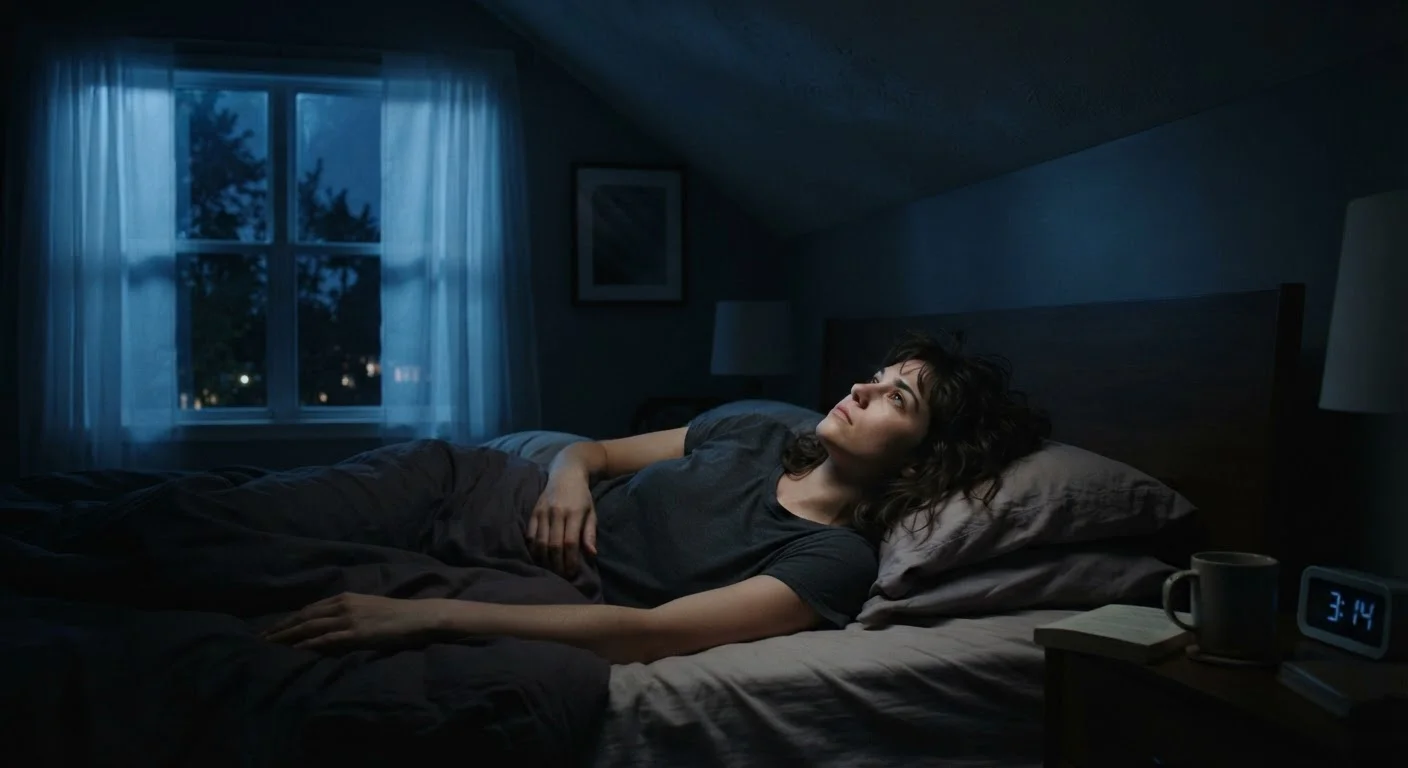
The relationship between sleep and mental health is bidirectional - meaning each directly influences the other. Poor sleep can worsen anxiety, depression, and emotional regulation, while mental health struggles often disrupt sleep quality and duration. This creates a self-reinforcing cycle that can be difficult to break without addressing both sides simultaneously.
Researchers use the term 'bidirectional' to distinguish this relationship from simple cause-and-effect; neurobiological pathways involving the amygdala, prefrontal cortex, and stress-hormone systems help explain how the two systems interact.
Why Sleep and Mental Health Are Inseparable
For much of the 20th century, sleep problems were treated as a byproduct of mental illness - a symptom to manage once the underlying condition was addressed. Current research tells a more complicated story. Sleep and mental health are deeply interwoven, each capable of disrupting the other in ways that create persistent cycles.
Studies published in journals including JAMA Psychiatry and The Lancet Psychiatry have documented that people with insomnia are significantly more likely to develop depression over time - and that people with depression almost universally experience disrupted sleep. The directionality runs both ways, which is why researchers now commonly describe this as a bidirectional relationship.
Understanding this dynamic matters because it shifts how we think about both conditions. Sleep deprivation isn't just an inconvenience; it's a physiological stressor with measurable effects on brain function, hormone balance, and emotional resilience. Similarly, mental health isn't purely psychological - it has biological underpinnings that directly affect the body's ability to rest.
10-15%
Adults with chronic insomnia
Estimates from the American Academy of Sleep Medicine suggest roughly 10-15% of adults experience chronic insomnia, with higher rates among those with mood disorders.
2x
Increased depression risk with insomnia
A meta-analysis in the journal Sleep found that individuals with insomnia had approximately twice the risk of developing depression compared to those without sleep difficulties.
7-9 hrs
Recommended nightly sleep for adults
The American Academy of Sleep Medicine recommends that adults sleep seven or more hours per night on a regular basis to promote optimal health.
What Happens to the Brain During Sleep Deprivation
When sleep is cut short or fragmented, the brain's emotional processing systems are among the first to show the effects. Neuroimaging research has found that sleep-deprived individuals show significantly greater amygdala reactivity - the amygdala being the region associated with threat detection and fear response. At the same time, functional connectivity between the amygdala and the prefrontal cortex, which governs rational thinking and impulse control, tends to weaken.
The practical result: emotions feel bigger, more difficult to manage, and harder to contextualize. Irritability, impulsivity, and negative thinking are common consequences of even short-term sleep loss. Over time, these effects compound.
REM sleep - the stage associated with vivid dreaming - appears especially important for emotional memory processing. During REM, the brain is thought to re-consolidate emotional experiences in a way that reduces their emotional charge. Disrupting REM sleep, which often happens with alcohol use, certain medications, or sleep disorders, may impair this process. For readers interested in how sleep timing connects to brain function, circadian rhythm research offers additional context.
Mental Health Conditions That Commonly Affect Sleep
Nearly every major mental health condition has documented effects on sleep architecture - the structure and timing of sleep stages. Some of the most widely studied include:
- Depression: Commonly associated with early-morning awakening, reduced slow-wave (deep) sleep, and altered REM timing.
- Anxiety disorders: Often marked by difficulty falling asleep due to racing thoughts, and frequent nighttime awakenings tied to hyperarousal.
- PTSD (post-traumatic stress disorder): Strongly linked to nightmares, fragmented sleep, and chronic insomnia.
- Bipolar disorder: Sleep disruption is both a symptom and a potential trigger for mood episodes.
Recognizing these patterns doesn't mean readers should attempt self-diagnosis. Rather, it illustrates why sleep history is a standard part of mental health assessments - and why daily habits that support mental clarity can serve as a meaningful, low-barrier starting point for general wellbeing.
“Sleep is not a luxury or an indulgence - it is a biological necessity, and its disruption has real and measurable consequences for mental health that we can no longer afford to overlook.”
— Matthew Walker, Professor of Neuroscience and Psychology, University of California, Berkeley; author on sleep science
Breaking the Cycle: What the Evidence Supports
Because the relationship is bidirectional, interventions that target sleep can have meaningful effects on mental health - and vice versa. Cognitive Behavioral Therapy for Insomnia (CBT-I) is one of the most well-studied non-pharmacological approaches and has shown consistent efficacy in clinical trials, including benefits that extend to mood symptoms.
Sleep hygiene practices - consistent sleep and wake times, limiting stimulants, managing light exposure - are generally recommended as foundational supports. A wind-down routine in the evening is one practical example. Research on morning routines and sleep science also suggests that daytime behavior shapes nighttime sleep quality in measurable ways.
For anyone experiencing persistent sleep difficulties alongside low mood, anxiety, or other mental health symptoms, consulting a licensed healthcare provider is the most important step. These are conditions with effective treatments, and neither has to be managed in isolation.
This article is for general informational and educational purposes only and does not constitute medical advice. Always consult a qualified healthcare professional for concerns about your sleep, mental health, or any other medical matter.