

Key Takeaways
Our Verdict
The research is consistent: more daily movement is associated with better health outcomes across nearly every major category, from heart disease risk to mood. The difference between sedentary and active lifestyles isn't just about gym time - it's about how much you move across the entire day. Even modest increases in routine activity make a real difference.
| Best for | Recommended |
|---|---|
| Those with desk-based jobs looking to reduce health risks | Active lifestyle with structured movement breaks |
| People who already exercise but sit most of the day | Active lifestyle supplemented by regular standing and walking breaks |
| Those new to movement who want low-pressure entry points | Gradual transition strategies - short walks, standing, light activity |
What Sedentary and Active Actually Mean
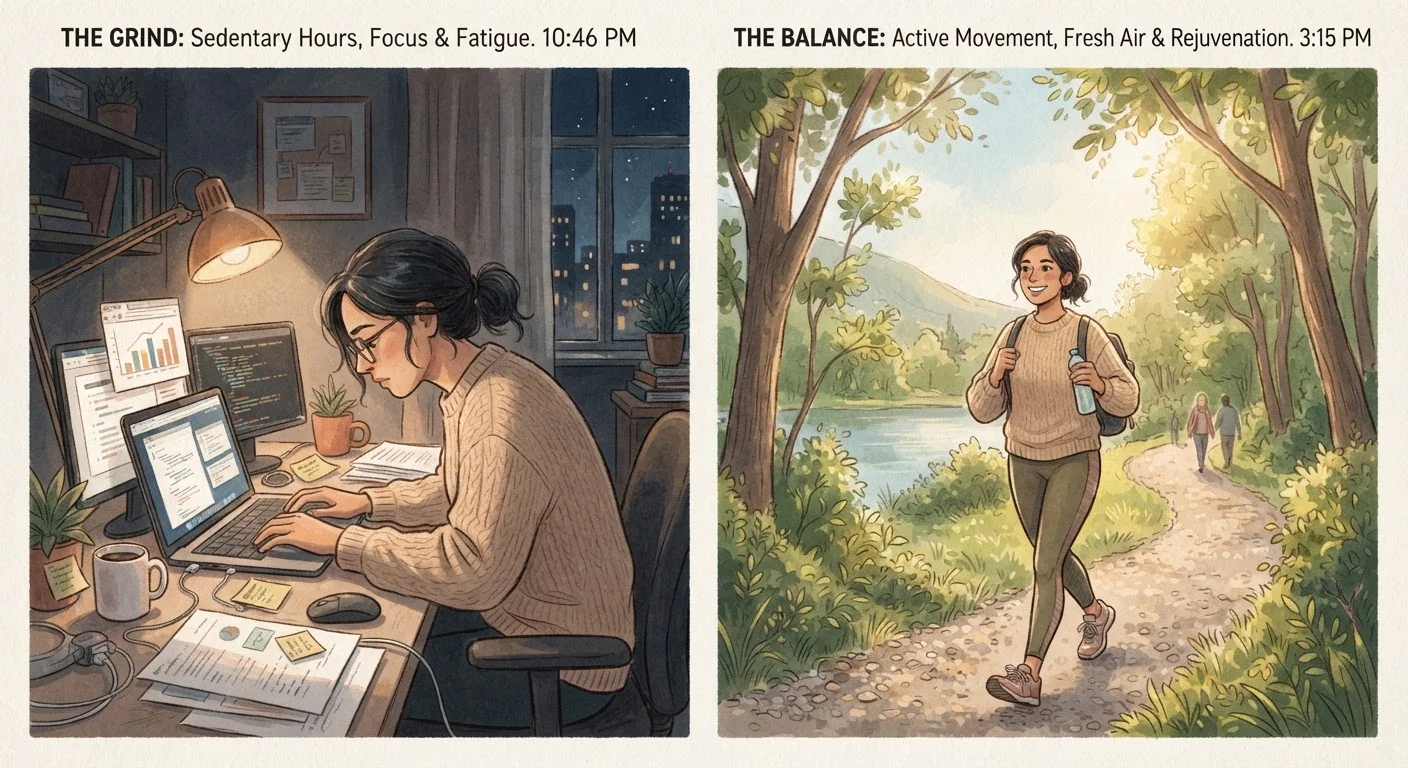
The terms "sedentary" and "active" are often treated as personal identity labels, but in public health research they describe patterns of daily physical behavior. A sedentary lifestyle is generally defined as one in which most waking hours involve prolonged sitting or reclining with very little movement - think extended desk work, long commutes, and screen-heavy evenings with no meaningful breaks.
An active lifestyle, by contrast, doesn't necessarily mean training for a marathon. It means distributing movement throughout the day - walking to destinations, taking stairs, standing periodically, and engaging in regular moderate physical activity. The U.S. Department of Health and Human Services guidelines describe at least 150 minutes of moderate-intensity aerobic activity per week as a reasonable baseline for most adults, but researchers also emphasize that breaking up prolonged sitting matters separately from structured exercise.
One important nuance: you can meet weekly exercise targets and still be functionally sedentary if the other 15+ waking hours are spent sitting. This concept - sometimes called the "active couch potato" phenomenon - has drawn significant research attention.
How the Health Gap Breaks Down
The differences between sedentary and active patterns show up across several major health domains:
- Cardiovascular health: Prolonged sitting is associated with increased risk of heart disease, even after accounting for leisure-time exercise. Regular movement supports healthier blood pressure and lipid levels.
- Metabolic function: Extended sedentary time is linked to insulin resistance and higher rates of type 2 diabetes. Frequent movement helps regulate blood glucose more effectively throughout the day.
- Mental health: Physical activity is consistently associated with lower rates of depression and anxiety in population studies. Sedentary behavior, particularly excessive screen time in adults, correlates with poorer mood and cognitive outcomes.
- Musculoskeletal health: Prolonged sitting affects posture, hip flexor tension, and lower back health. Active lifestyles support stronger bones and better joint function over time.
- Longevity: Research published in major journals, including studies in The Lancet and JAMA, associates higher levels of daily physical activity with lower all-cause mortality.
150 min
Recommended weekly moderate activity
The U.S. Department of Health and Human Services Physical Activity Guidelines for Americans recommend at least 150 minutes of moderate-intensity aerobic activity per week for most adults.
~25%
Reduction in early death risk
Research published in The Lancet suggests that meeting physical activity guidelines is associated with roughly a 25-30% lower risk of all-cause mortality compared to being inactive.
6-8 hrs
Average daily sitting time for U.S. adults
National Health and Nutrition Examination Survey data indicates many American adults spend six to eight or more hours per day in sedentary behaviors.
For a more detailed look at how movement interacts with other lifestyle factors, explore the physical health dimensions of social connection, which is another underappreciated driver of wellbeing.
The Comparison: Sedentary vs. Active Patterns
Looking at these two lifestyle patterns side by side across key health and lifestyle criteria helps clarify the practical stakes.
| Sedentary Lifestyle | Active Lifestyle | |
|---|---|---|
| Cardiovascular risk | Higher risk of heart disease | Lower risk with consistent movement |
| Blood sugar regulation | Impaired by prolonged sitting | Better regulated throughout the day |
| Mental health | Associated with higher depression rates | Linked to lower anxiety and depression |
| Energy levels | Often lower, more fatigue reported | Generally higher sustained energy |
| Musculoskeletal health | Increased back pain and tension | Stronger muscles and better posture |
| Long-term mortality risk | Higher all-cause mortality in studies | Lower mortality across major research |
| Accessibility | Default for most desk-based workers | Requires intentional habit building |
It's worth noting that this comparison reflects general population-level findings. Individual variation exists, and anyone with specific health concerns should speak with a qualified healthcare professional before making significant changes to their activity levels.
Realistic Ways to Close the Gap
Moving from a sedentary to a more active daily pattern doesn't require overhauling your life. Research suggests that even small, consistent changes accumulate into meaningful health benefits over time.
- Micro-movement breaks: Standing or walking for two to five minutes every hour can interrupt the metabolic effects of prolonged sitting. Workplace research on short breaks supports their value for both wellbeing and productivity.
- Incidental activity: Parking farther away, taking stairs, or walking during phone calls all add up without requiring dedicated workout time.
- Walking as a foundation: Walking is one of the most accessible and well-studied forms of movement. A comparison of walking and running outlines how both stack up across fitness and health outcomes.
- Self-monitoring: Tracking daily steps or sitting time can raise awareness of patterns you might not notice otherwise. A weekly wellness self-check offers a practical framework for noticing habits before they solidify.
If traditional exercise feels like a barrier, that's worth addressing directly. Movement approaches for people who don't identify as exercisers explore non-gym paths to a more active daily life.
This article is for general informational and educational purposes only and does not constitute medical advice. Consult a qualified healthcare professional for guidance specific to your health situation.